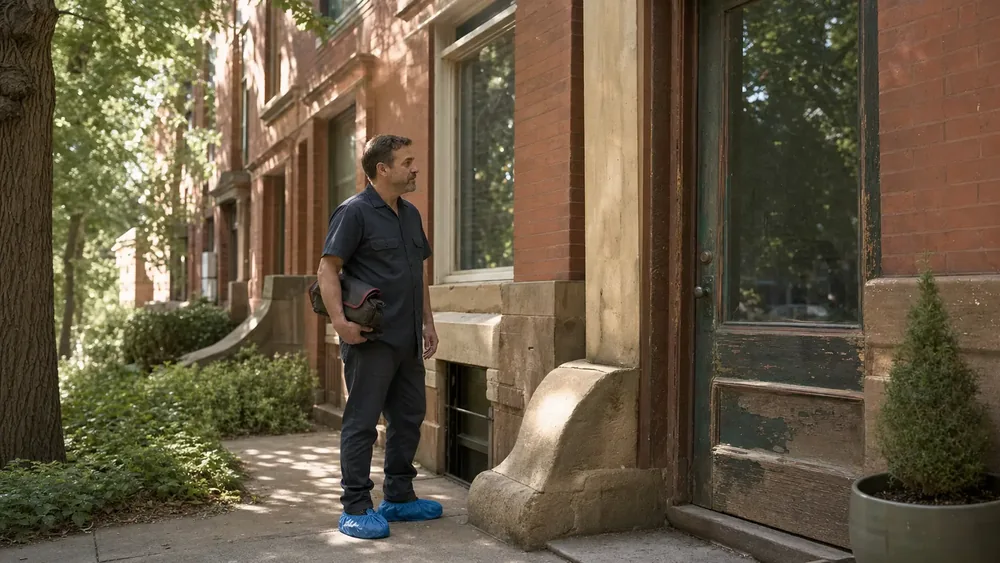
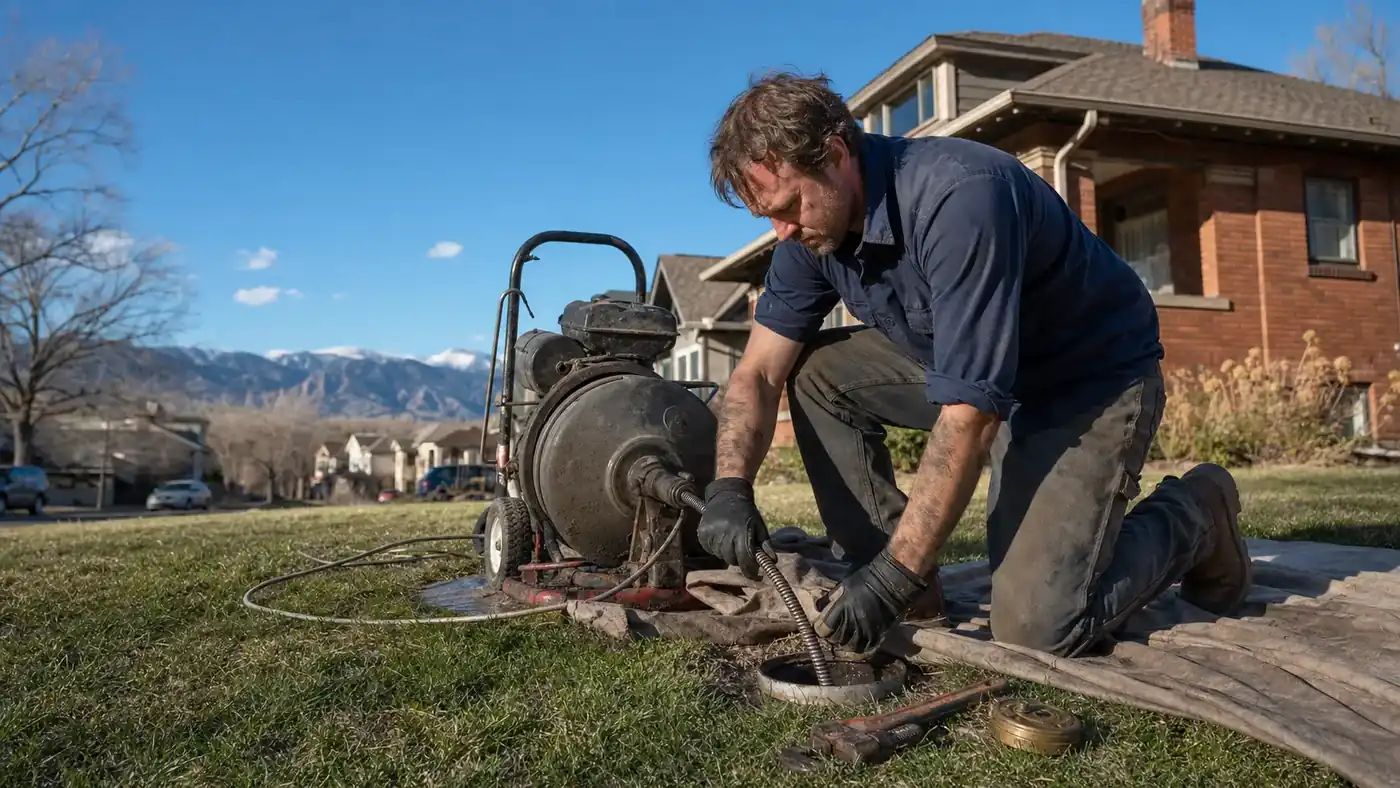
Drain cleaning in Denver, CO
- Fixture & main lines
- Cable, jetting & camera
- Price before we start
Slow drains, stubborn clogs and main-line backups across the Denver metro. Tell us what yours is doing and we'll work out the next step.
Call (720) 794-0974You'll know the price before any work starts.
Drain backing up right now? Describe it on the phone and we'll tell you what you're dealing with.
Call (720) 794-0974What is your drain doing?
Most people don't arrive here knowing whether they need a cable, a jetter or a camera. That's fine. Pick the line below that sounds most like your situation and it will take you to the right place.
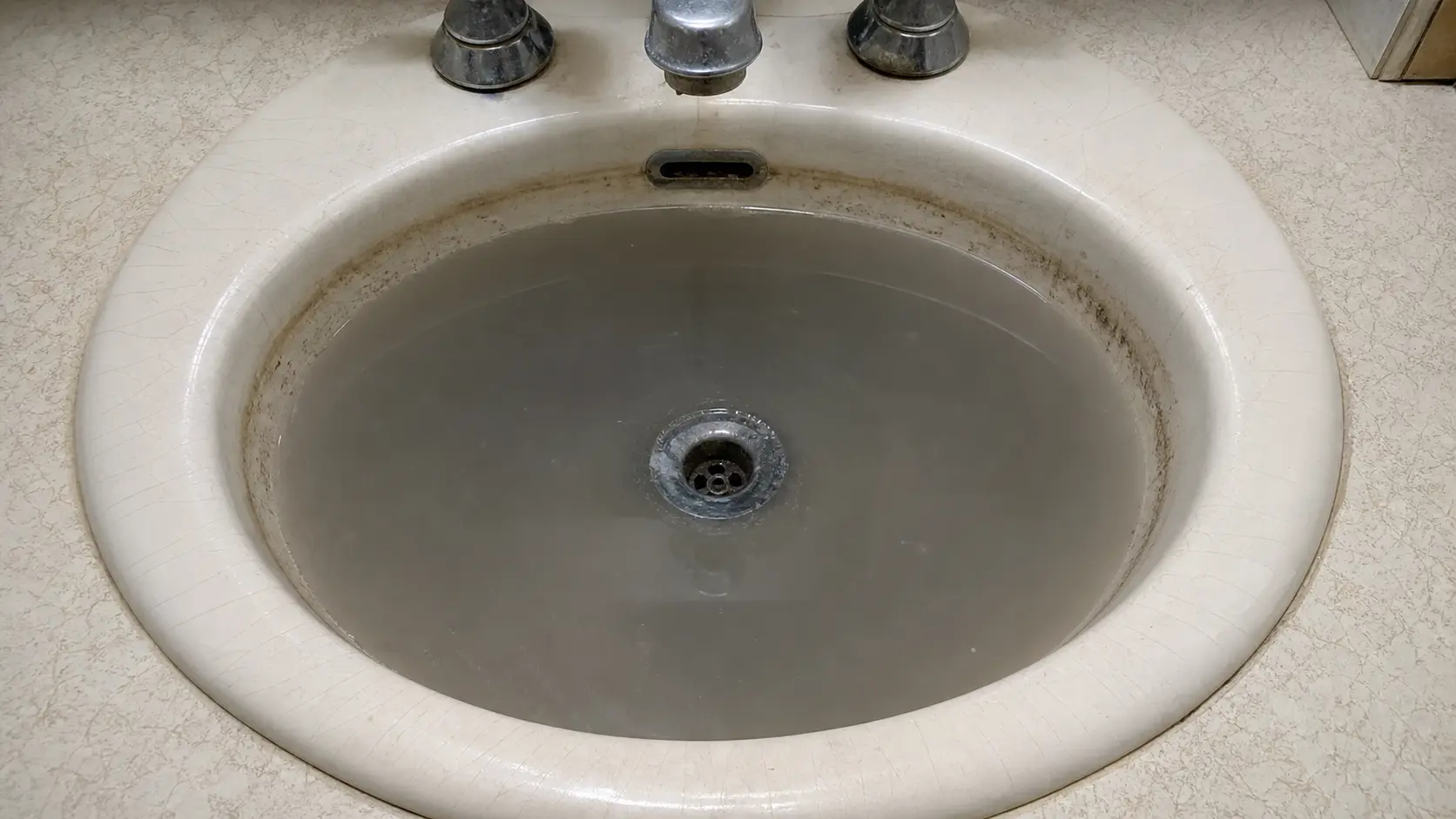
One sink or tub is draining slowly
A single slow fixture usually means buildup in that branch line, most often hair and soap in a bathroom or grease in a kitchen run.
See drain cleaning →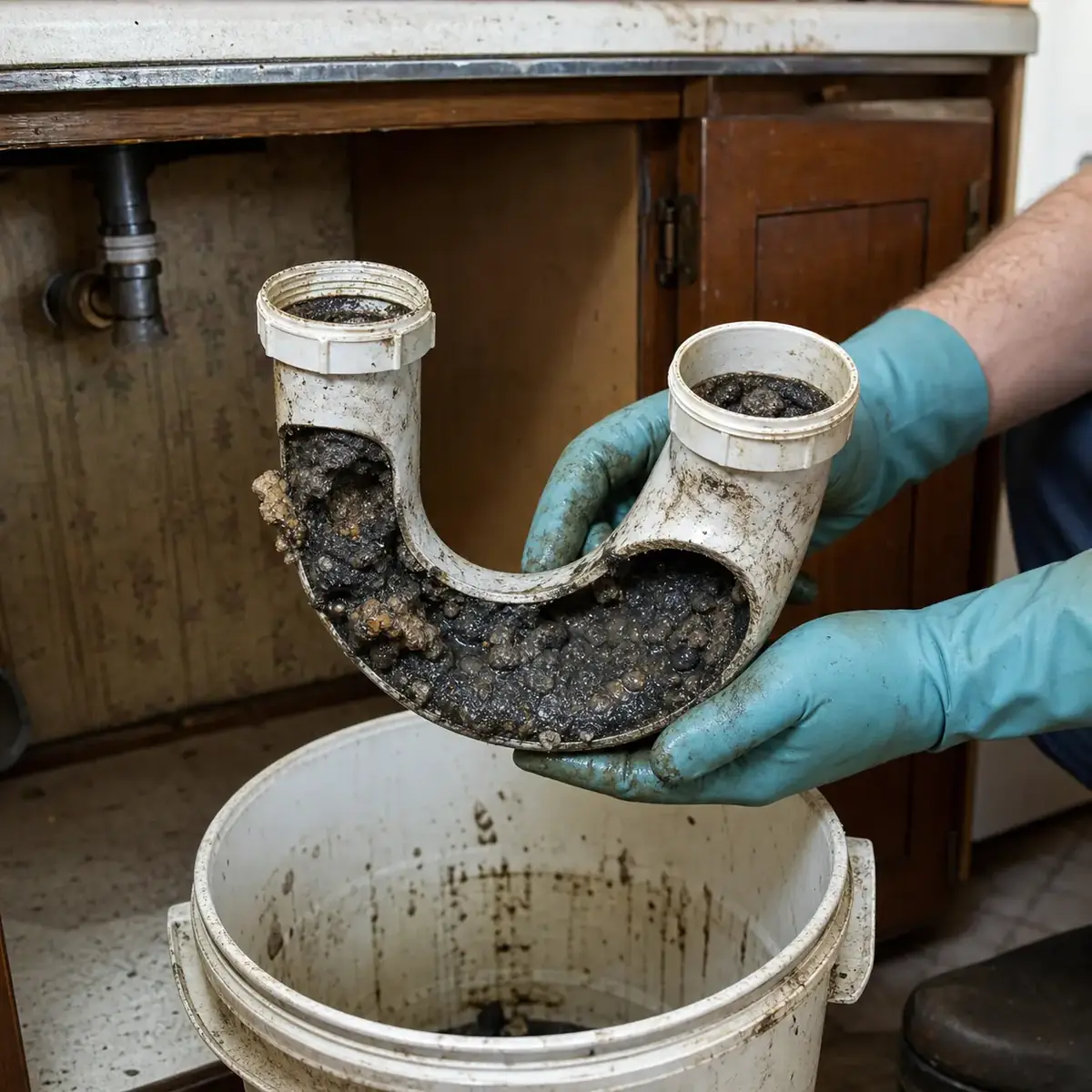
A fixture keeps clogging no matter what you do
Plungers and hand augers fix a lot of clogs. When they stop working, something further down the branch line is holding it up.
See clogged drain repair →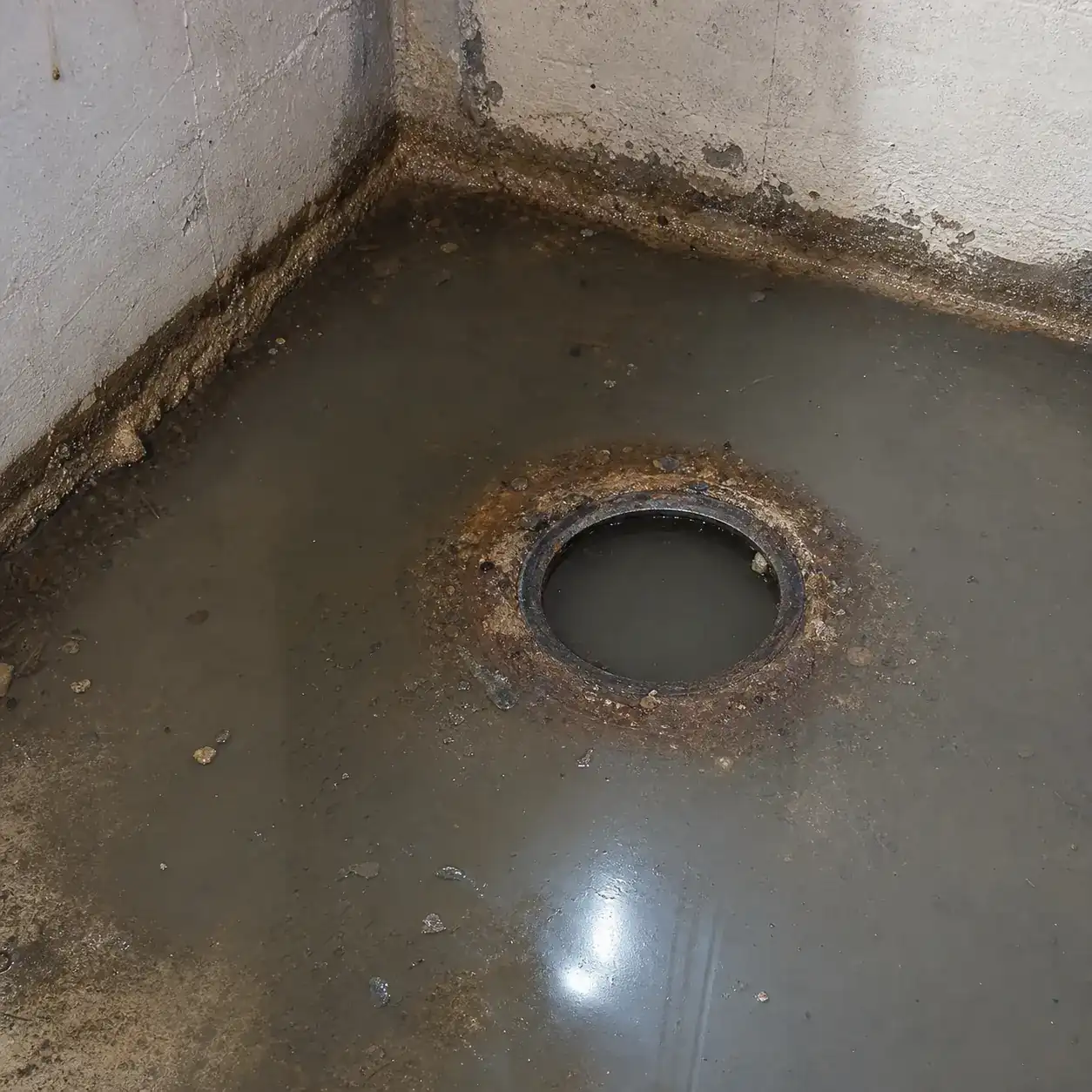
Water is backing up in more than one place
More than one fixture usually points at the main line. Stop running water anywhere in the house, then call.
See emergency service →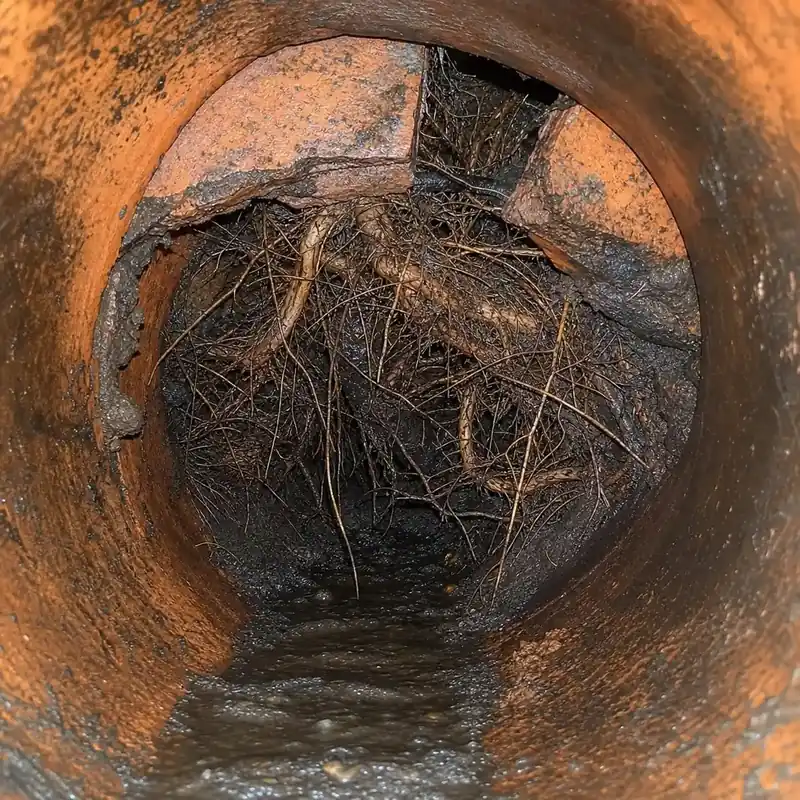
The same clog comes back every few months
A clog on a schedule is usually a main-line problem, and in Denver that very often means tree roots at a clay joint.
See rooter service →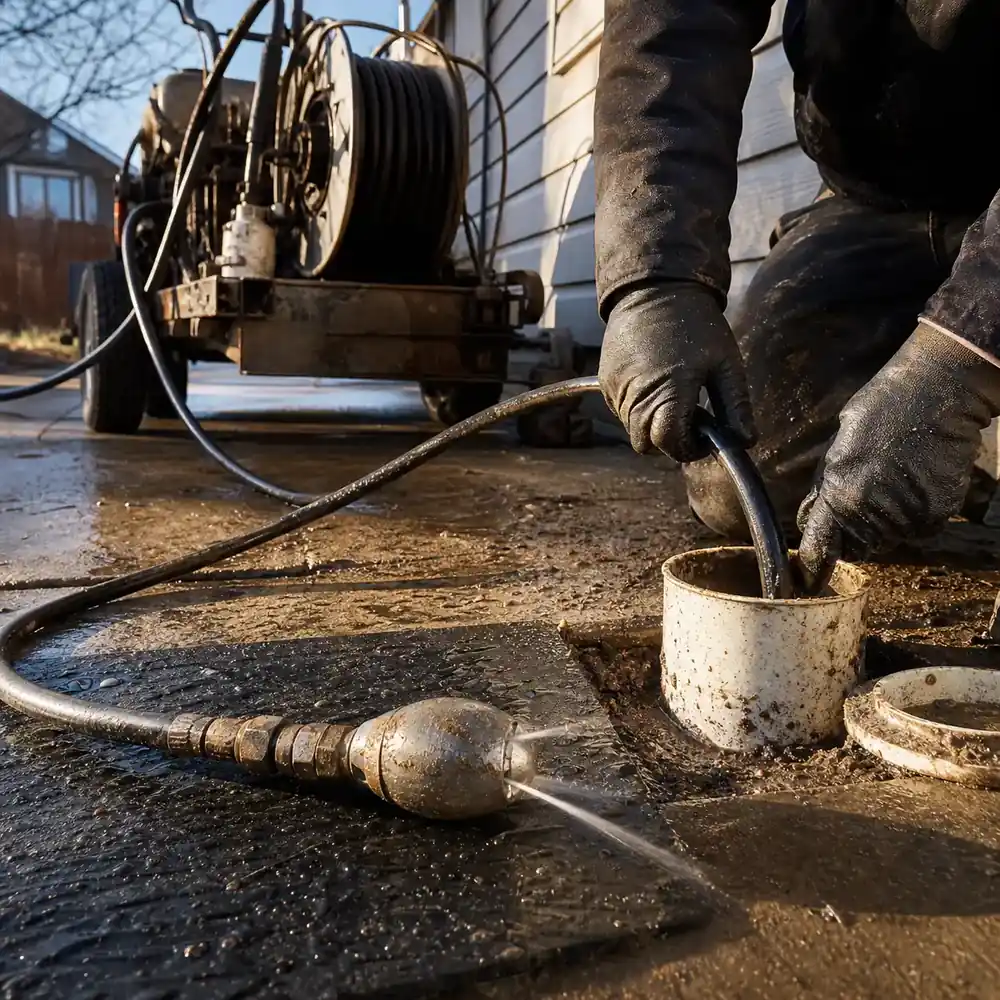
Grease and buildup a cable won't hold back
High-pressure water scours the pipe wall instead of punching a channel through the blockage and leaving the coating behind.
See hydro jetting →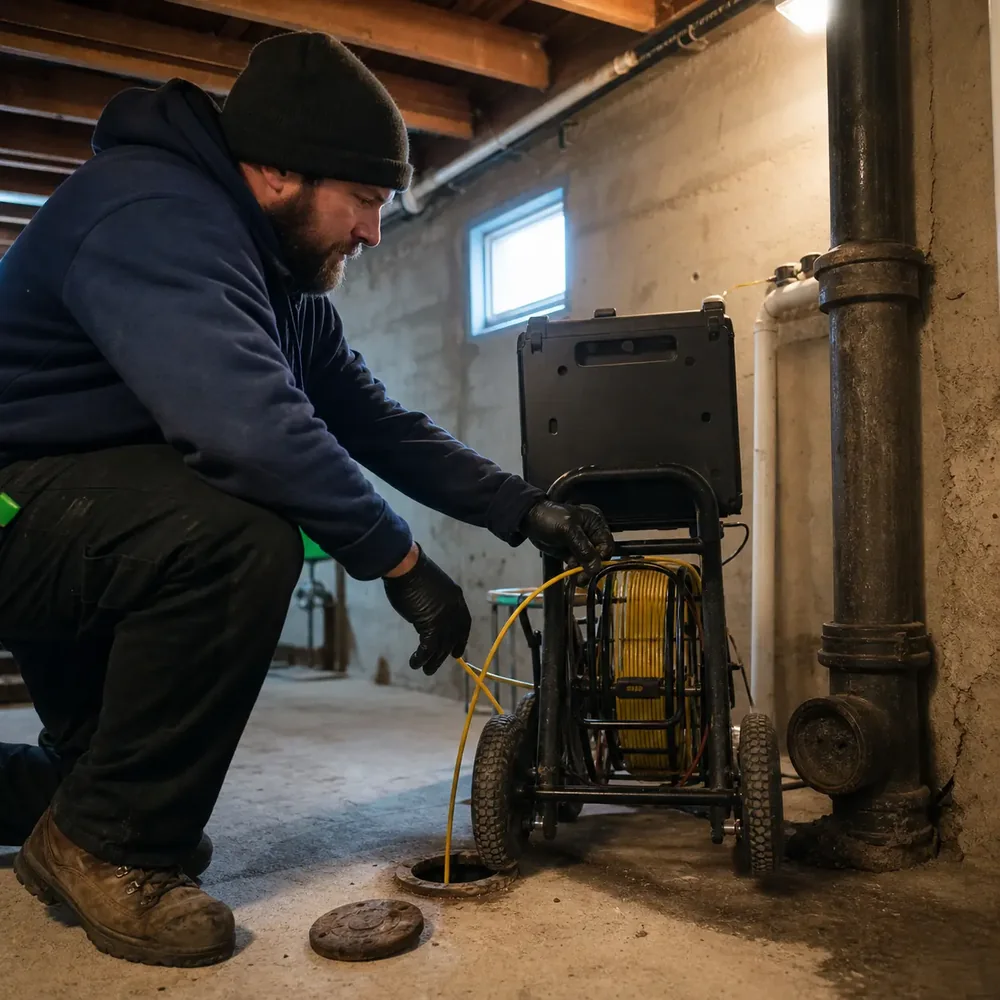
You want to know what's actually inside the line
A camera shows the pipe's condition and where the problem sits, so nobody has to guess and nobody has to trust a guess.
See camera inspection →Not sure which service you need? Call (720) 794-0974 and describe what your drain is doing.
Call (720) 794-0974What happens when we come out
Four steps, and they do not change. You will know what we found, what it costs and what we are doing before any machine comes off the truck.
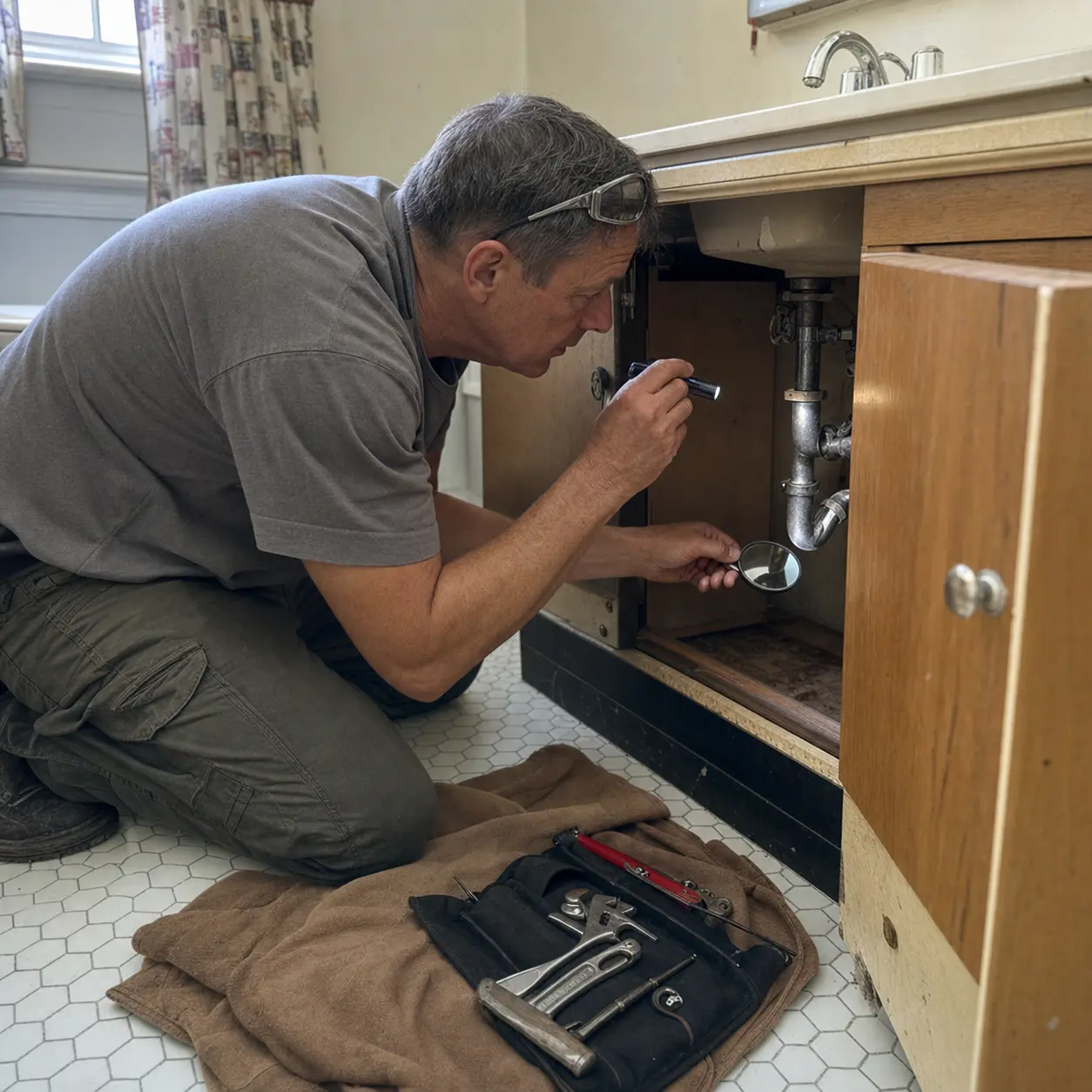
We look at the problem first
Which fixture is affected, whether anything else is backing up, and where the cleanout is. That usually tells us whether this is a branch line or the main sewer line.
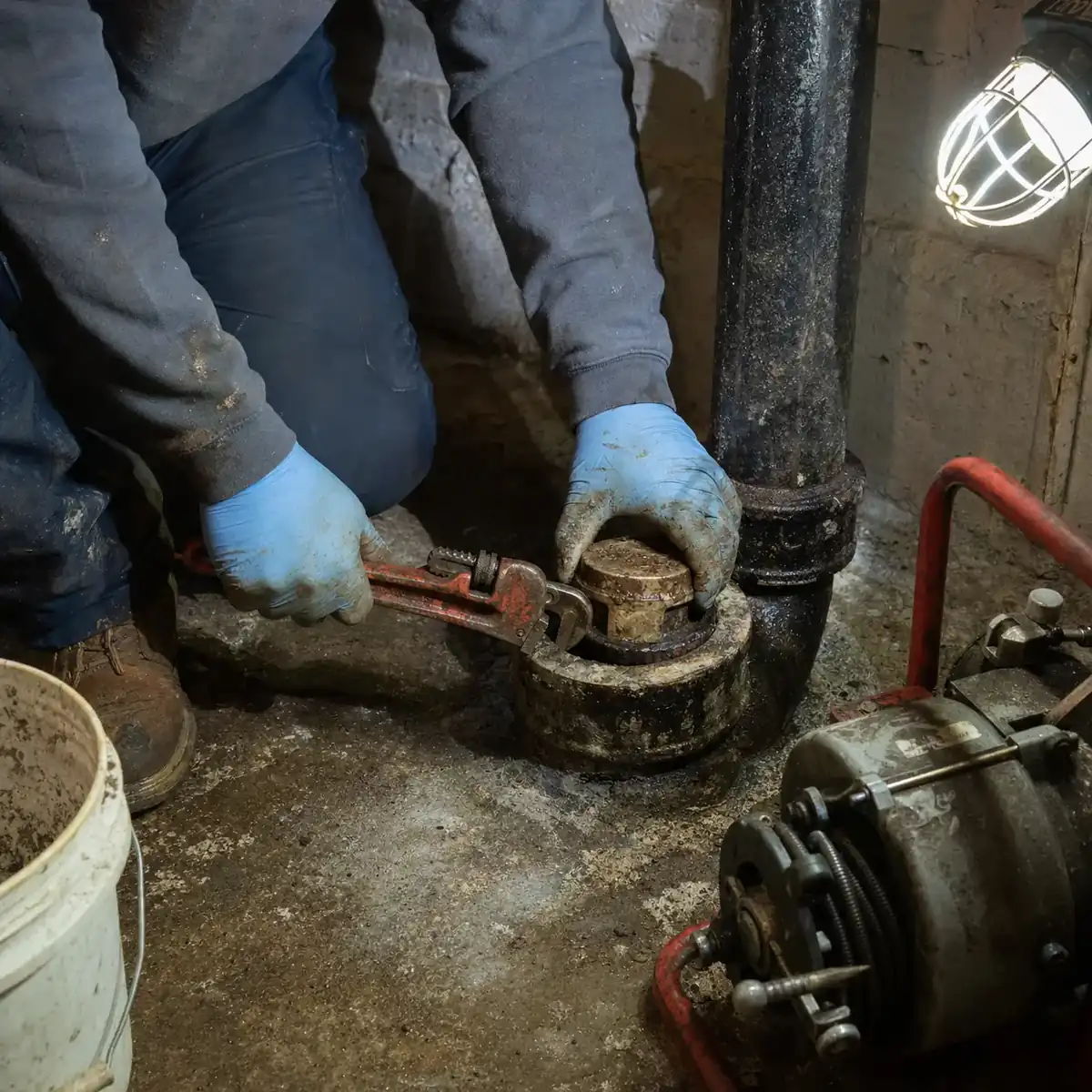
We explain it, then price it
In plain language: what is likely causing it, what clearing it involves, and what it costs. You approve the price before anything starts.
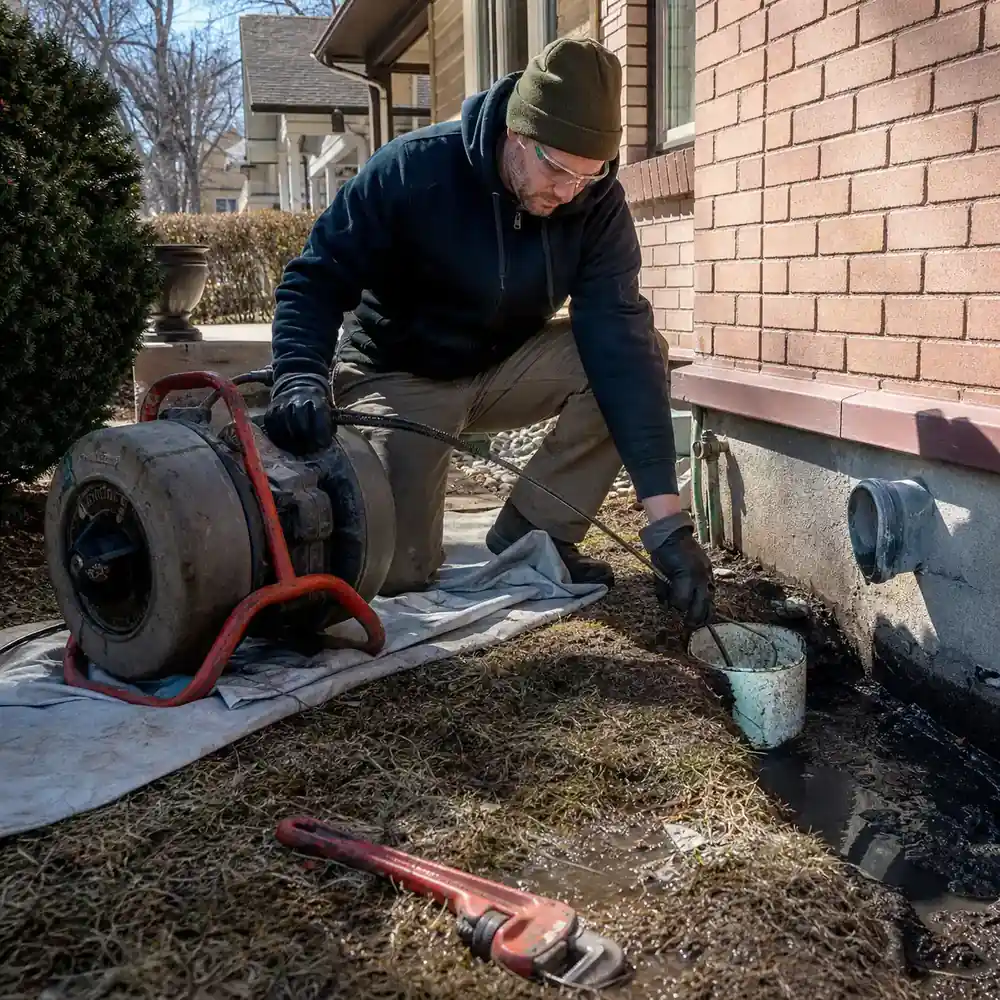
We clear the line
Cable and cutting head sized to the pipe. If the job turns out to be different once the line is open, we stop and tell you rather than carrying on and adding it to the bill.
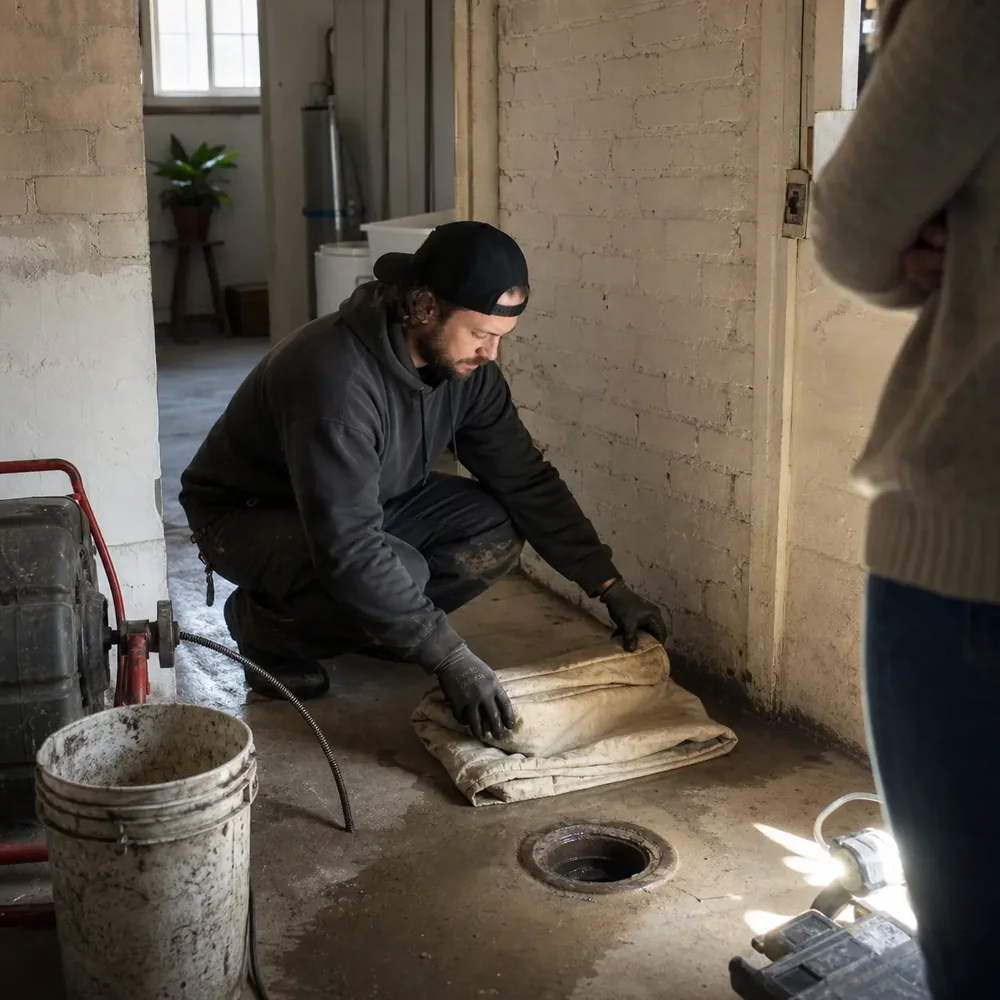
We show you the result
Including what came out, because what came out tells you what caused it. If a camera run makes sense afterwards, we will say so and say why.
Want to know what a visit to your address would involve? Ask on the phone.
Call (720) 794-0974What actually moves the price
Drain cleaning prices in Denver vary more than most homeowners expect, and the reason isn't the company. It's the job. Five things move the number, roughly in this order.
Fixture line or main sewer line. The single biggest factor. A bathroom sink is a small machine and usually under an hour. A main sewer line is 75–100 feet of heavy cable, cutting heads sized to a 4-inch pipe, and often two people. Different jobs, not different sizes of one job.
Whether there's an accessible cleanout. The variable homeowners are least aware of, and the one that moves the number most. Plenty of pre-1950 Denver homes don't have one, and the line then has to be reached another way.
How far in the blockage sits. A clog in the P-trap under a sink is minutes. A blockage 60 feet out in the lateral is a different scale of work.
Cable or hydro jetting. Cabling is the standard method and the lower-cost one. Jetting costs more, and it's worth paying for when the pipe is coated rather than plugged.
Time of day. After-hours, weekend and holiday work is priced differently by most companies in this market. Ask what applies before you commit, whoever you call.
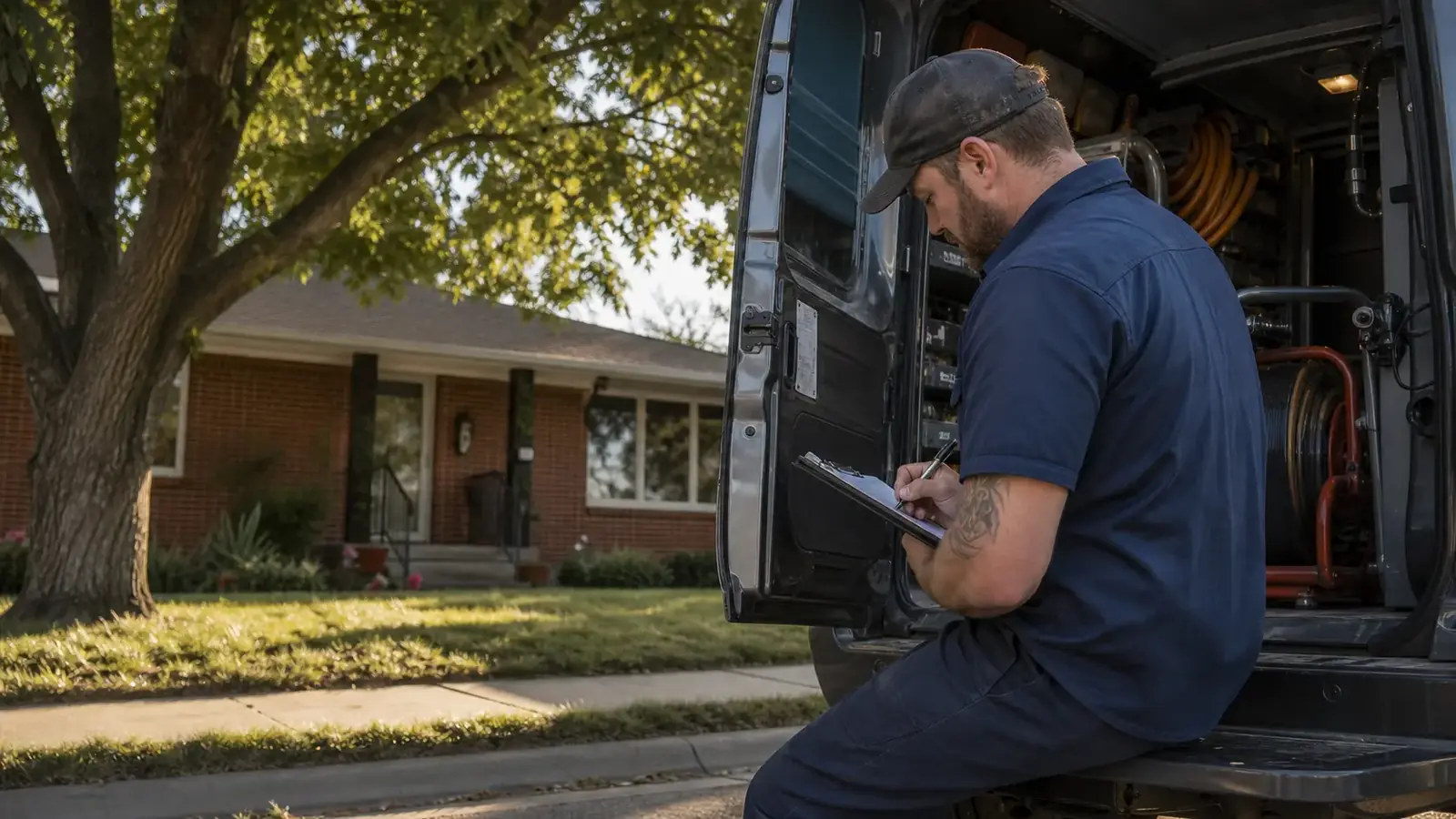
You'll know the price before we start
We look at the problem first, explain what's involved, and give you the price. Work only begins after you say yes. If the line turns out to be a different job once it's open, we stop and tell you rather than carrying on and adding it to the bill.
Get the price for your lineWhy call a drain specialist instead of a general plumber
A general plumber handles water heaters, fixtures, gas lines and drains. A drain specialist does one of those things all day.
That matters mostly in equipment and judgement. Clearing a kitchen branch line, a 4-inch main sewer line and a root-packed clay lateral are three different jobs needing three different machines. A hardware-store snake will not reach a main line. A drum machine sized for a sink will not cut roots. And knowing when a cable is enough, versus when high-pressure jetting is worth it, versus when the honest answer is "put a camera down there before anyone spends money", comes from doing it repeatedly.
We stay inside drains and sewer lines on purpose. It keeps the equipment right and the advice specific.
See all six services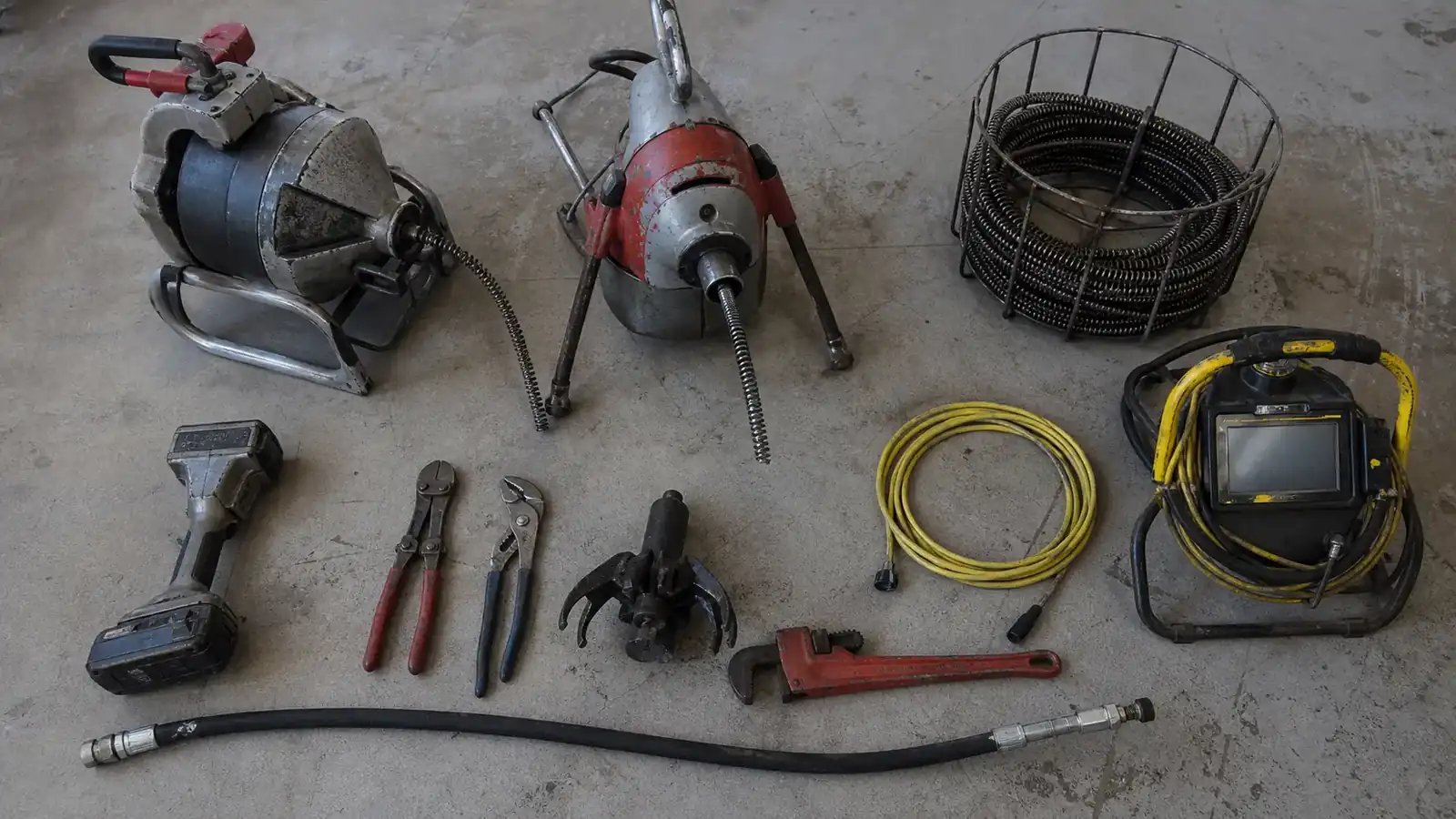
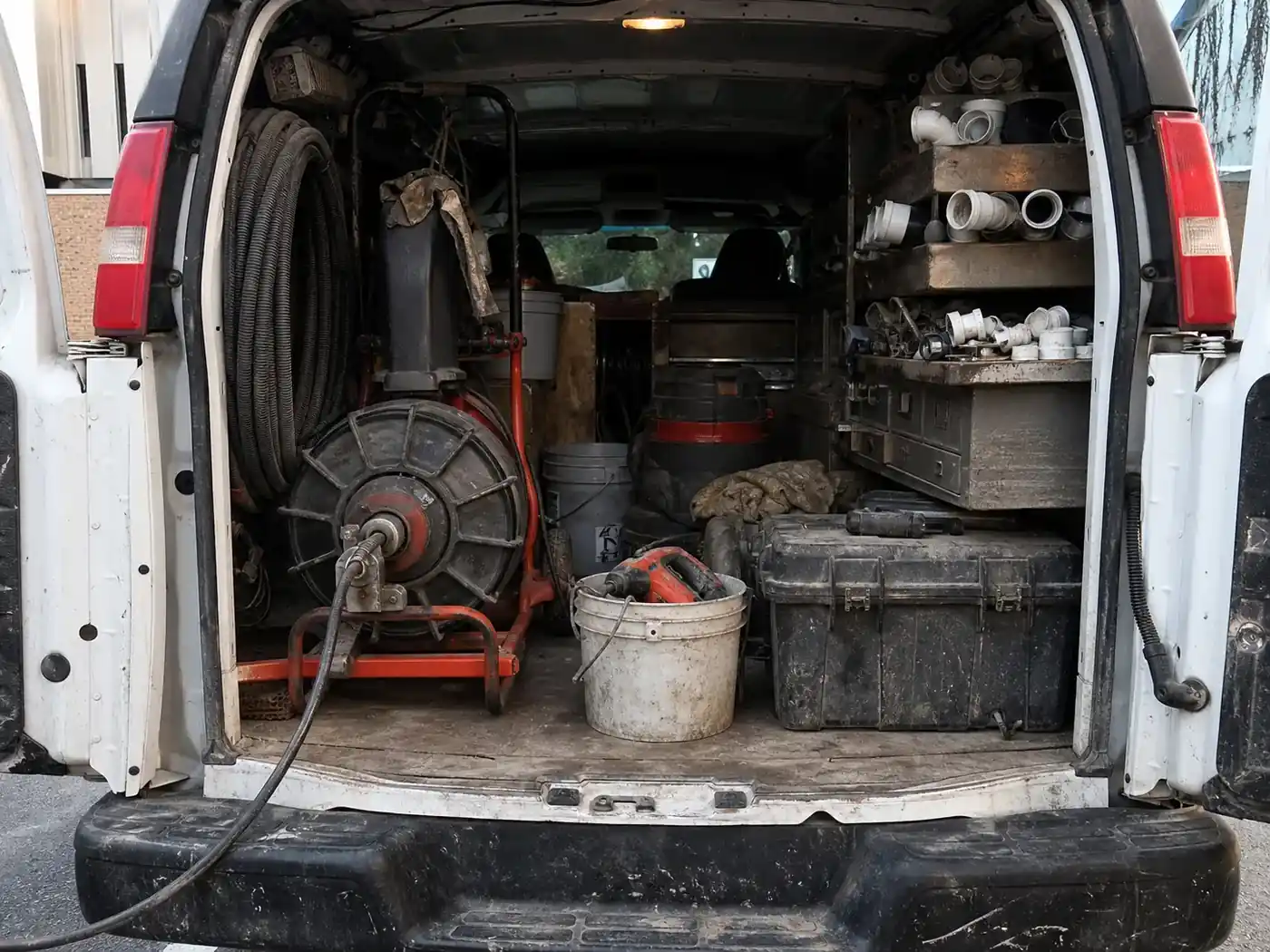
What we don't do
We're a drain and sewer line service, and that's deliberate. It means there are jobs we're not the right call for, and we'd rather say so than take them.
We don't do water heaters, fixture replacement, gas lines, remodel plumbing, slab leaks or supply-side pipe repair. If your problem is water coming in rather than waste going out, you want a general plumber and we'll tell you that on the phone.
We also don't do sewer line replacement, trenchless repair or CIPP pipe lining at this stage. If a camera inspection shows a line that's beyond cleaning, we'll tell you plainly and explain what the options are. We'd just rather be straight that carrying out that work isn't something we currently offer.
Being narrow is the point. It keeps the equipment right for the work and the advice specific to it.
See what each service coversDenver homes, Denver drain problems
Denver's housing stock is unusually varied, and drains behave differently across it. The first question worth asking about any drain problem here is how old the house is.
Vitrified clay laterals. Pre-1960 neighborhoods often sit on clay sewer laterals with a joint every few feet. Mature Siberian elms, cottonwoods and silver maples send roots toward those joints, which is why so much of our main-line work is root-related and why it peaks in spring.
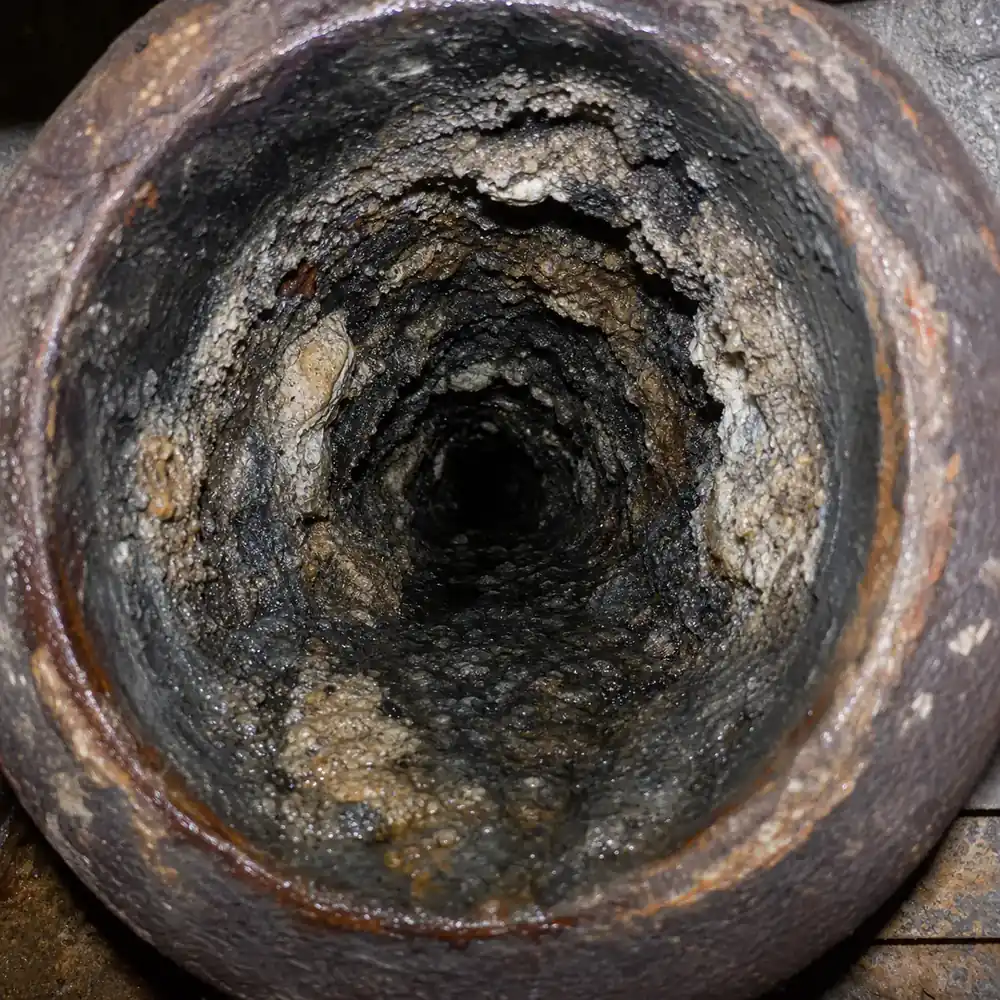
Cast iron, and descaling. Homes built before about 1950 frequently have cast iron drain lines. Beyond narrowing as it corrodes, cast iron develops a rough internal surface, so it catches everything passing. Where the pipe is otherwise sound, descaling with a chain knocker or controlled jetting restores the internal diameter. Where it isn't, it doesn't, and a camera is how you tell the difference.
Orangeburg. Between roughly the 1940s and the early 1970s some homes were connected with bituminized fibre pipe of tar-impregnated wood pulp, sold as Orangeburg. It deforms into an oval under load rather than cracking, so it narrows slowly, and it can't safely be jetted. If a camera shows an oval cross-section on a house of that age, cleaning is a holding action rather than a fix.
PVC, and what goes down it. Newer areas like Central Park and Green Valley Ranch are on PVC with fused joints. Roots aren't usually the story there. Grease, wipes marked flushable and what goes down the disposal are.
Hard water. Denver runs moderately hard water, which builds mineral scale in shower and tub drains and gives hair something to hold onto.
None of this tells us what's happening in your line. That takes looking.
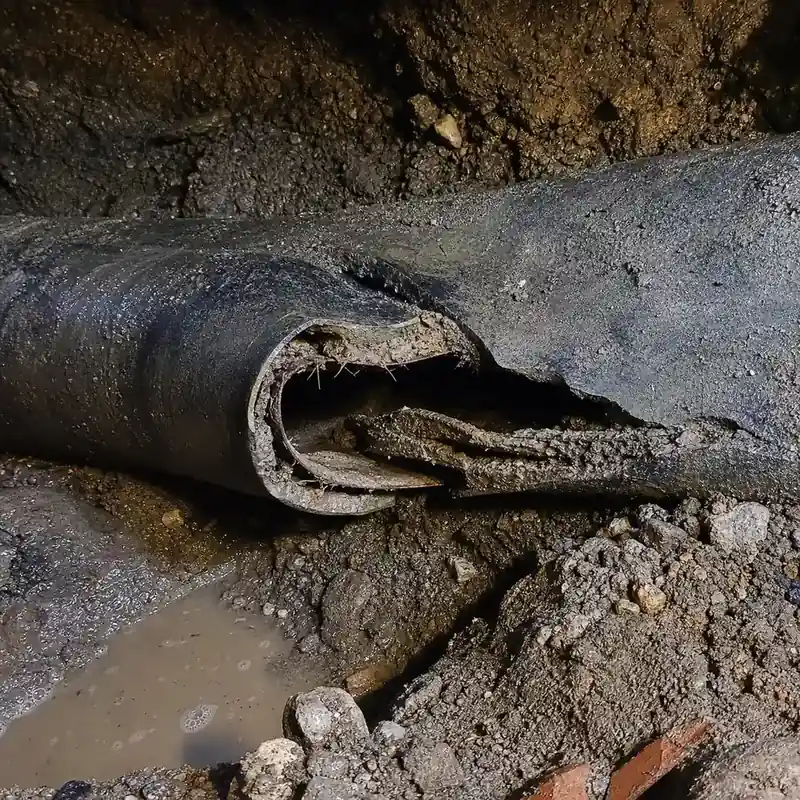
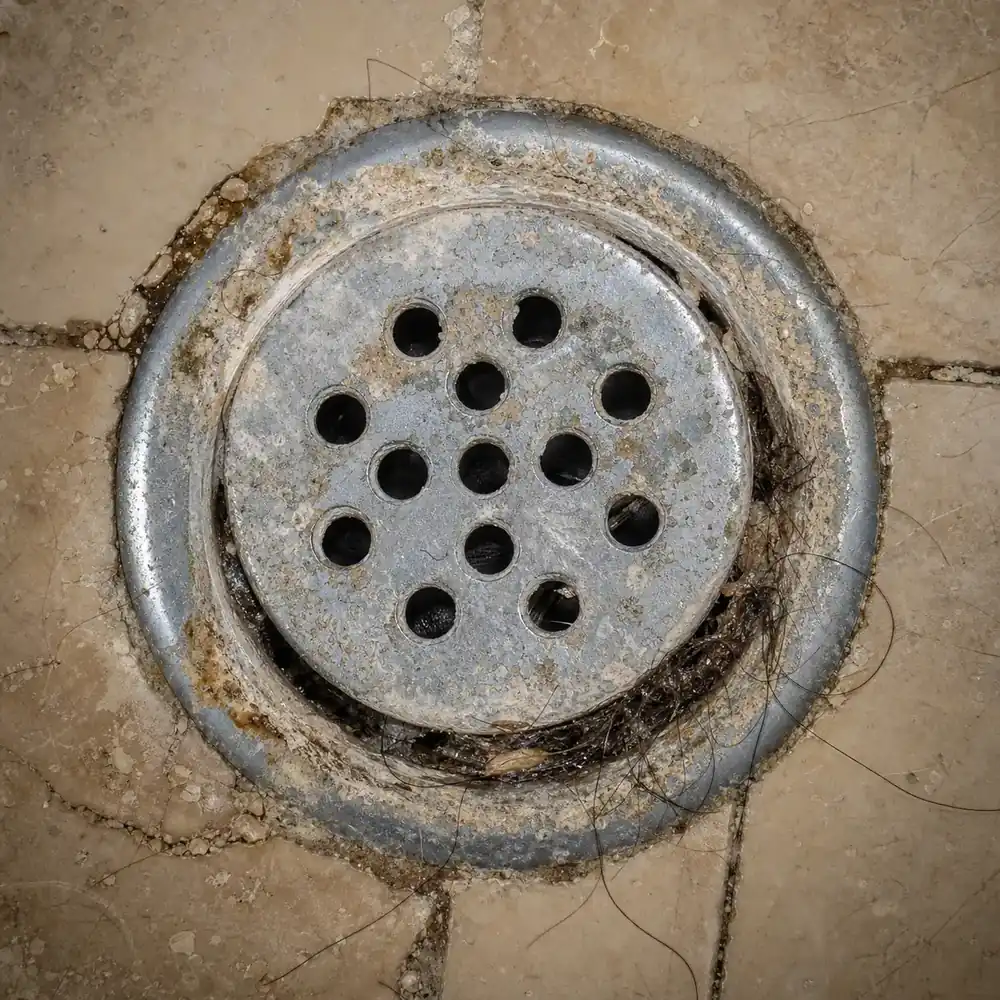
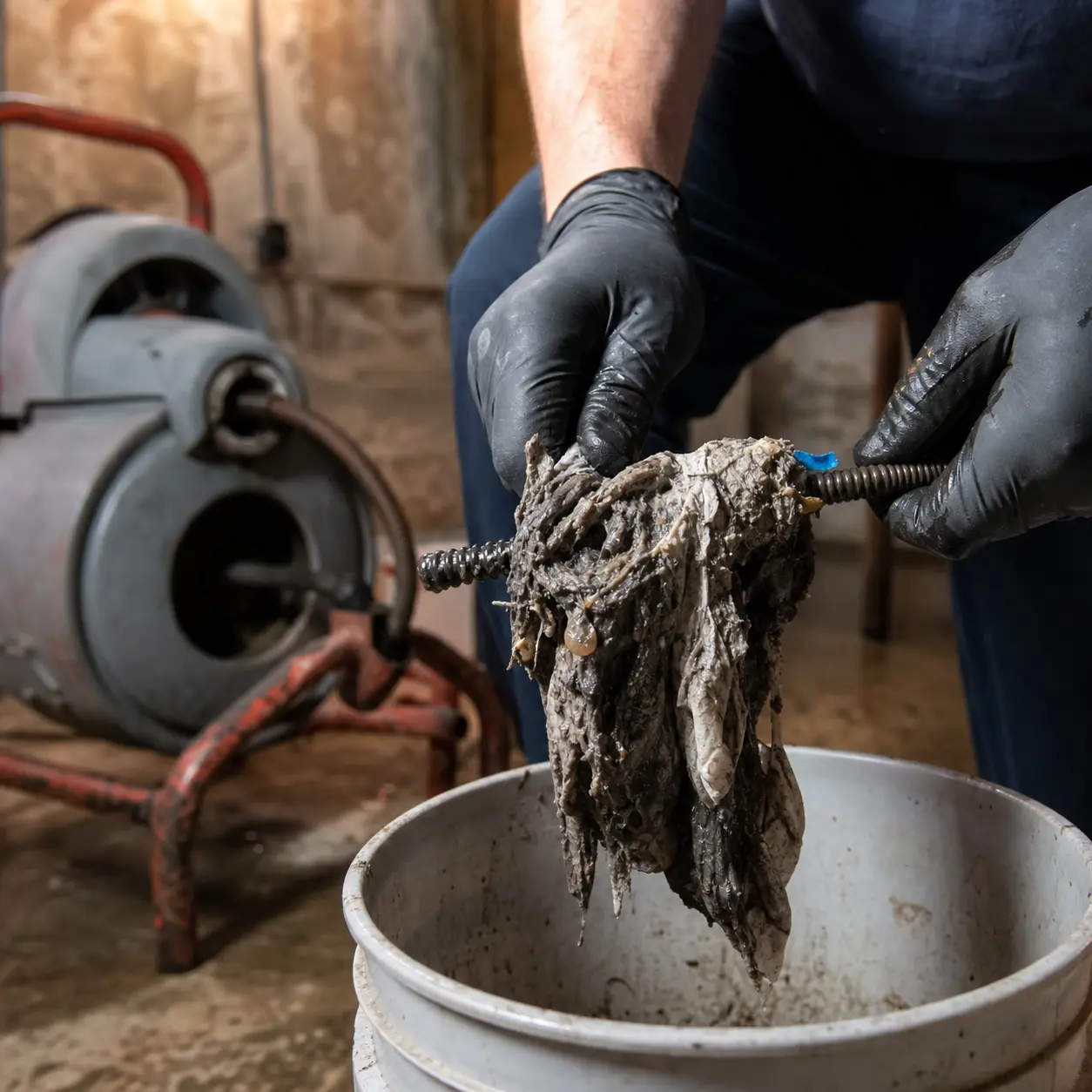
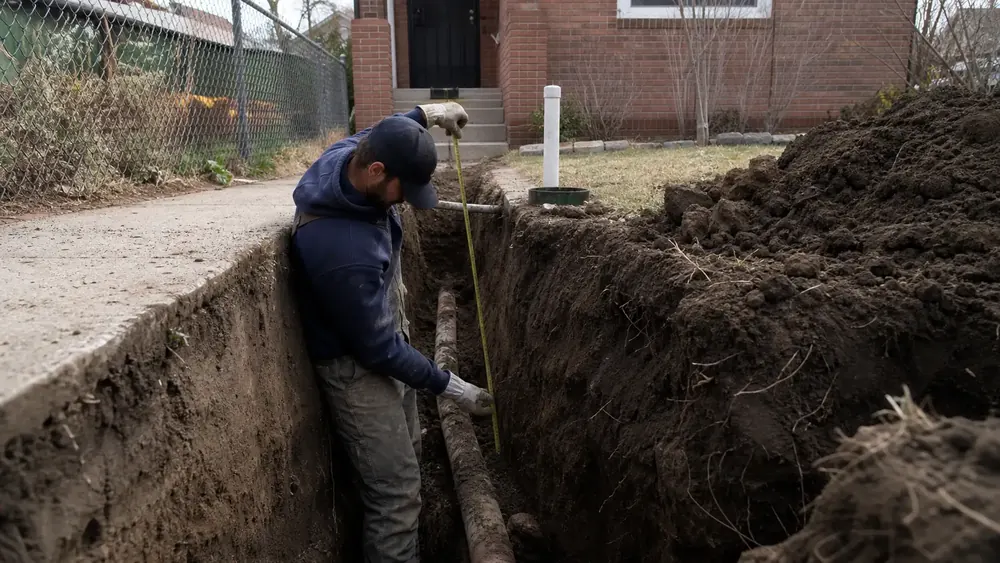
Not sure which of these describes your house? Tell us roughly when it was built and what the drain is doing, on (720) 794-0974.
When Denver drains give trouble
Drain calls in this city are not evenly spread through the year. Knowing the pattern tells you when a slow drain is worth taking seriously.
Root season in spring. As soil warms and trees come out of dormancy, roots push hardest toward the moisture and nutrients leaking from a cracked clay joint. Main-line calls concentrate here. A drain that has been quietly slowing since January tends to fail in March.
Late spring runoff. Saturated ground around a compromised lateral changes how a line behaves, and groundwater finding its way into a cracked pipe adds volume the line wasn't carrying in February.
Kitchen season from Thanksgiving through New Year. More cooking, more grease, more disposal use and more people in the house, all arriving at a branch line that was already coated. Kitchen line calls climb sharply through the holidays.
Deep winter. Slow-moving lines in unheated crawl spaces, and floor drains that dry out and let sewer gas back into the basement. A dry trap smells like a blockage without being one, and running water into the drain refills the trap and settles it.
None of this is a reason to book preventive work you don't need. It's a reason to take a slow drain in March more seriously than a slow drain in August.
Your line, or the city's?
Worth understanding before you call anyone, because it decides who pays.
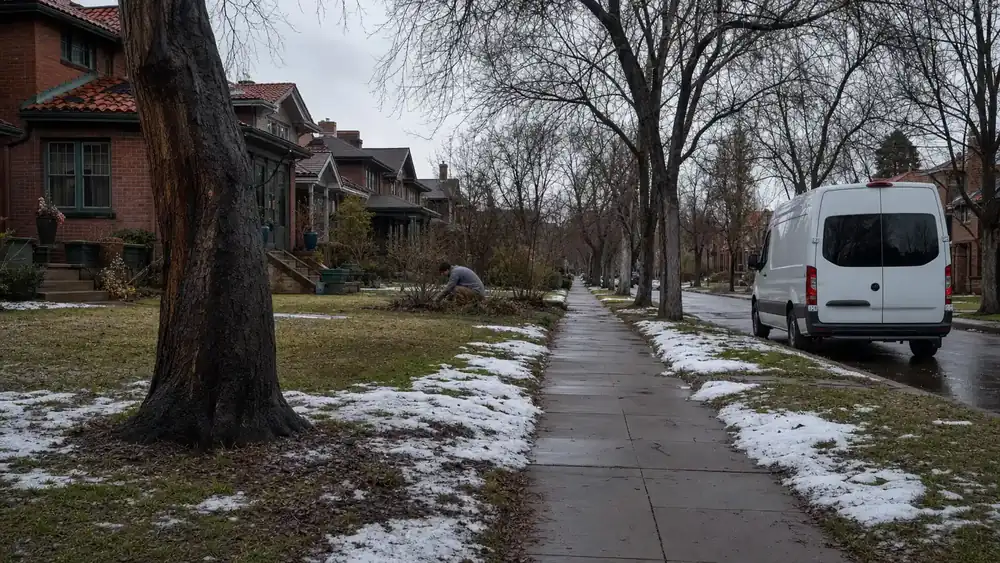
The sewer lateral, the pipe running from your house to the connection at the public main, is generally the property owner's responsibility. The main in the street is the utility's. In Denver, wastewater collection sits with the city's wastewater operation, and treatment is handled downstream by Metro Water Recovery. Your wastewater charge appears on your Denver Water bill even though Denver Water supplies drinking water rather than handling sewage, which confuses a lot of people every billing cycle.
The practical test is simpler than the org chart. If the problem is only at your property, it's almost certainly your lateral. If neighbours on the same block have the same trouble in the same week, that points downstream and is worth reporting.
Either way, a camera inspection settles it by showing where the restriction actually sits, which is the difference between fixing a problem and paying for someone else's.
What a camera inspection shows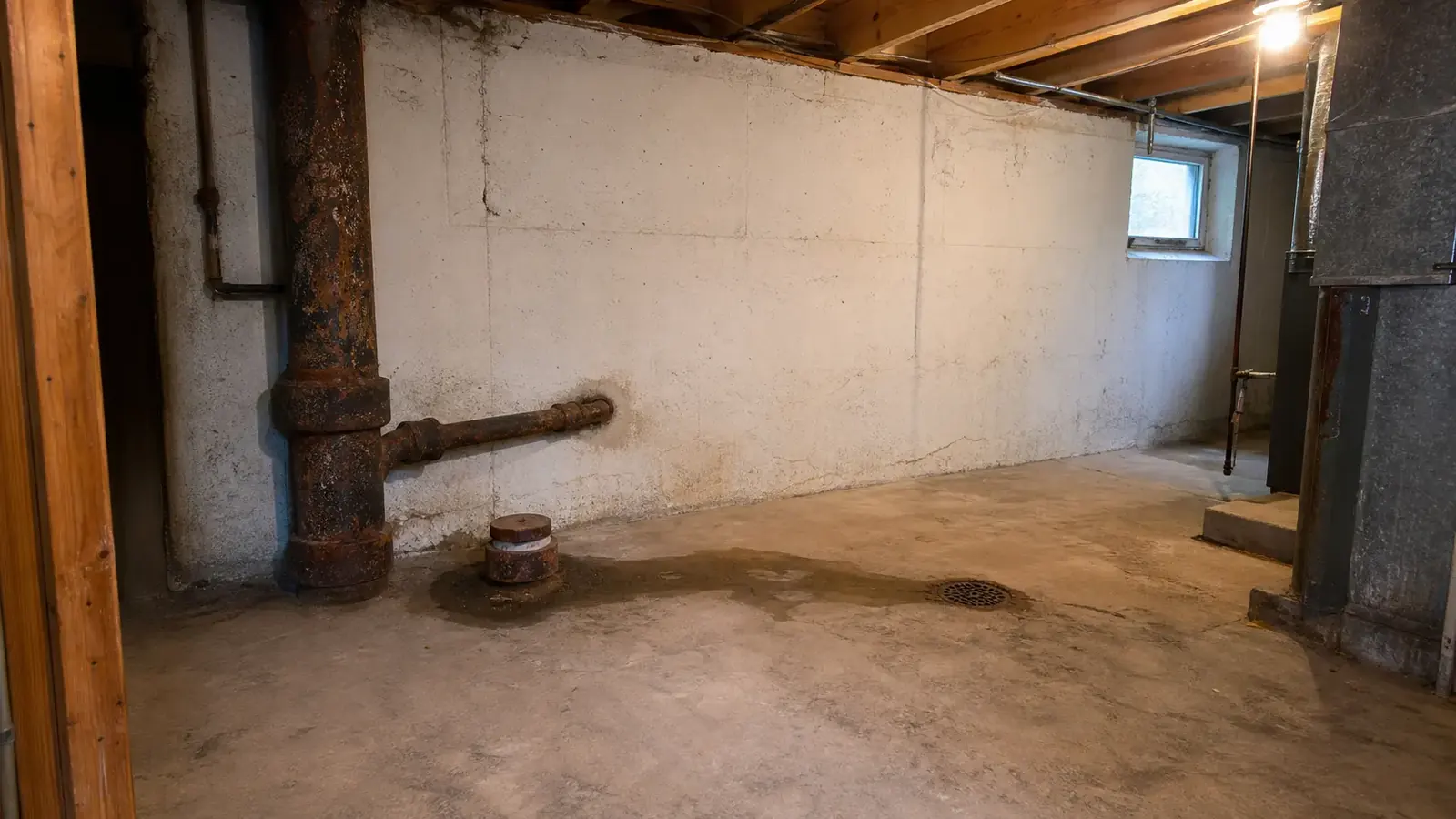
Where we work in Denver
Denver and the surrounding metro
ZIP codes covered- 80203
- 80205
- 80206
- 80209
- 80211
- 80238
- 80249
- Denver neighborhoods
- Capitol Hill, Cherry Creek, Washington Park, Highlands, Five Points, Central Park, Green Valley Ranch
The map shows the area we serve rather than a shopfront. If you are not sure whether we reach you, call and ask. It takes ten seconds to check.
Water backing up right now?
Stop using the fixtures nearby, including toilets and the washing machine, and keep people and pets away from any standing wastewater. Then call and we'll work out what's happening.
Common questions
What is the average cost to unclog a drain?
It depends on which fixture, how far in the blockage sits, whether there's an accessible cleanout, and whether it's a branch line or the main sewer line. Those four things move the price more than anything else. We look first, then give you a price before any work starts.
Will you give me a price before you start the work?
Yes. We look at the problem, explain what clearing it involves, and give you the price. You approve it before we begin. If the line turns out to be a different job once it's open, we stop and tell you rather than carrying on and adding it to the bill.
Is professional drain cleaning worth it?
For a single slow sink, often not yet. A plunger or a hand auger clears plenty of those. It becomes worth it when the clog keeps returning, when more than one fixture is affected, or when a cable can't reach the blockage. Repeat clogs usually mean something structural.
How often should drains be cleaned?
There's no fixed schedule for most homes. Lines with a known problem, such as root intrusion, heavy scale in cast iron or a restaurant grease load, get cleaned on a cycle set by how fast they re-block. Everything else is better handled by symptom: slow drainage and gurgling are the early signals.
How fast can you get to my Denver address?
Call and we'll tell you what's realistic for today. It depends on where you are in the metro and what's already booked. If it's an active backup, say so when you call. That changes how we schedule it.
Are you licensed and insured in Colorado?
Ask us on the phone and we'll tell you exactly what we hold and what it covers. Worth knowing generally: Colorado's State Plumbing Board licenses plumbers and plumbing contractors, and states that it does not license drain cleaners as a separate trade.
Worth reading first
Four things homeowners ask us most, answered properly rather than in a sentence.
What drain cleaning costs in Denver
The five variables that move the price, how jobs sort by complexity, and how to compare quotes that aren't actually comparable.
Read the cost guide →Clogged drain or sewer line problem?
One simple test tells you whether you're dealing with a fixture clog or something in the main line. Worth doing before you call.
Read the guide →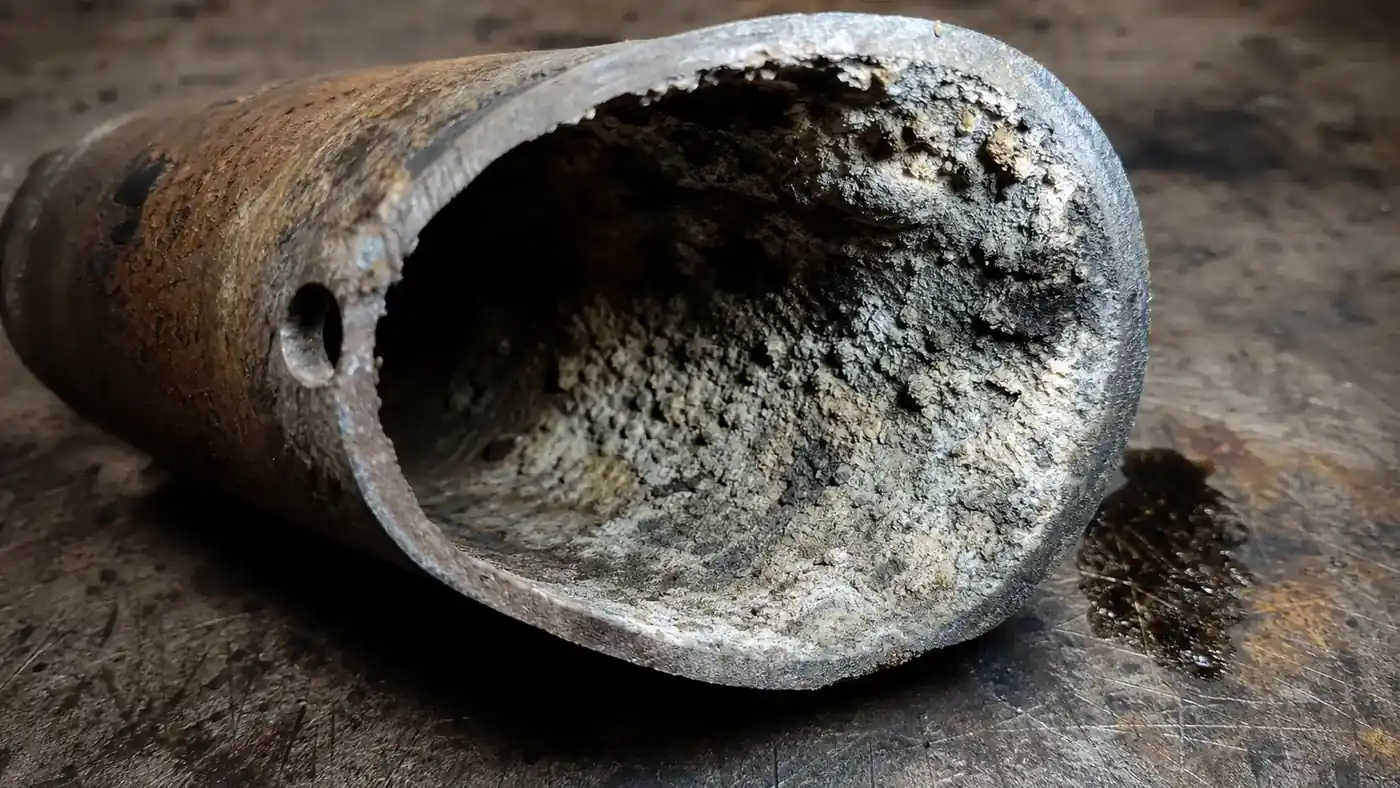
What liquid drain cleaners do to your pipes
What caustic cleaner actually does inside a pipe, why baking soda and vinegar is a myth, and what to do instead.
Read this first →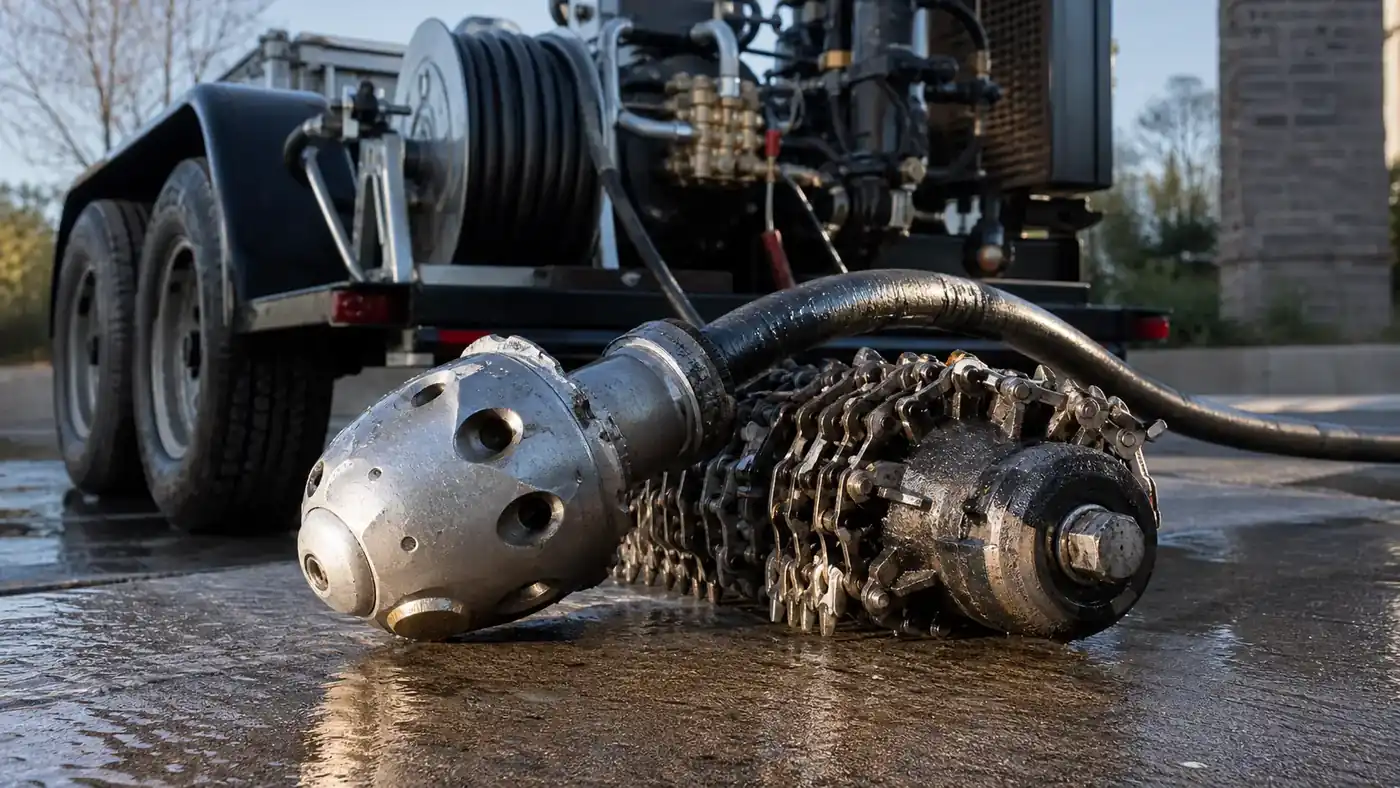
What Roto-Rooter charges in Denver
Why quotes vary so widely between companies, what drives the difference, and five questions worth asking whoever you call.
Read the comparison →Would rather just ask someone? That's usually faster. Call (720) 794-0974.
Call (720) 794-0974Tell us what's backing up
The quickest way to get an answer is to pick up the phone and describe what your drain is doing. Which fixture, when it started, and whether anything else is backing up. That is usually enough for us to tell you what you are dealing with before anyone is on site.
Call (720) 794-0974