
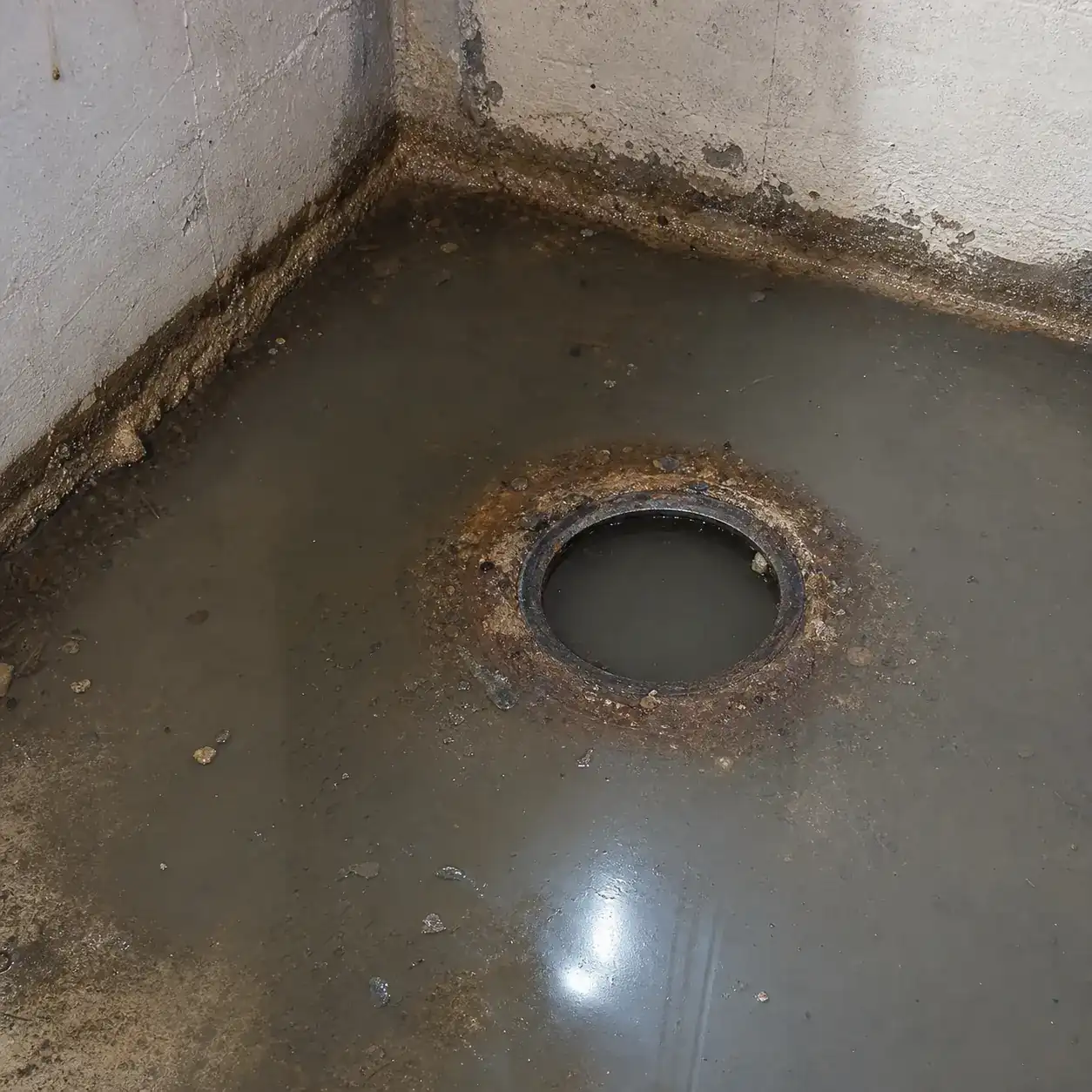
Basement floor drain backing up
- Usually the main line
- What to do first
- Denver causes
Stop running water anywhere in the house, keep people and pets away from standing wastewater, then call. The floor drain is rarely the actual problem.
Call (720) 794-0974Backing up right now? Stop all water use, then call and we will talk you through it.
Call (720) 794-0974It is usually not the floor drain
The floor drain is normally the lowest opening in the whole drainage system. That is its job: it sits at the bottom, and it is where water goes if the system cannot take what the house is sending it.
So when a basement floor drain backs up, the floor drain is almost never the thing that has failed. It is the place where a problem further down the line becomes visible. Something between that point and the city main is restricted, and the floor drain is simply the first opening low enough for the water to reach.
Which is why cleaning or plunging the floor drain itself rarely fixes anything. The line beyond it is the job.
The exception worth knowing: if only the floor drain smells and nothing is backing up, that is usually a dry trap rather than a blockage. Pour a bucket of water down it, and if the smell goes, that was it.
What this symptom means
- Most likely cause
- A restriction in the main sewer line or lateral, surfacing at the lowest opening in the house
- Common triggers
- A washing machine discharging, a bath draining, or several fixtures used at once
- In Denver, usually
- Root intrusion at a clay joint, heavy scale in cast iron, or wipes and grease in newer lines
- Treat as urgent when
- Sewage is present, more than one fixture is affected, or water is reaching finished space
- Not urgent when
- The drain only smells and nothing is backing up, which is usually a dry trap
- What settles it
- Clearing the main line, then a camera run to show why it blocked
What to do before anyone arrives
In order of how much difference it makes. None of it needs tools.
Stop running water anywhere in the house
Every fixture drains into the same system. A dishwasher cycle or a tap running upstairs adds to whatever is already surfacing downstairs.
Stop the washing machine mid-cycle
A washer discharges a large volume very quickly. It is the single most common trigger for a basement backup in a line that was already restricted.
Do not flush
Not even once to check. If the line is blocked, that water has to go somewhere, and it will find the lowest opening, which is the drain you are standing over.
Keep people and pets away from the water
If sewage or standing wastewater is present, keep people and pets out of the area while you arrange assistance.
Do not pour anything down it
Chemical drain cleaner will not move a main-line blockage, and it does not drain away. It sits in the line, and whoever opens that pipe next is opening one full of caustic liquid.
Move what you can
Anything on the floor near the drain, if it is safe to do so without walking through wastewater.
Health and insurance are outside what we do. If contamination has reached living space and you are unsure about health risk or a claim, speak to the appropriate professional as well as to us.
Happening right now? Call (720) 794-0974 and we will tell you what to do while we sort out reaching you.
Why it backed up when it did
A restricted line copes with normal use for months. What exposes it is volume arriving faster than the restriction can pass it.
The washing machine
The classic. A washer dumps its drum in a short burst. A line that handles a sink perfectly well cannot clear that volume fast enough, so it surfaces at the lowest opening. The washer revealed the blockage rather than causing it.
A bath draining
Same mechanism, same reason. A full tub emptying is a lot of water in a short time.
Several fixtures at once
Guests, laundry day, a full house. The line meets more than it has been quietly coping with, and the margin it had left disappears.
This is worth understanding because it explains a confusing pattern: the drain backs up, you stop using water, it drains away, and everything looks fine again. That is not the problem resolving. It is the restriction slowly passing what is behind it. It will happen again, and usually sooner.
What is usually restricting the line
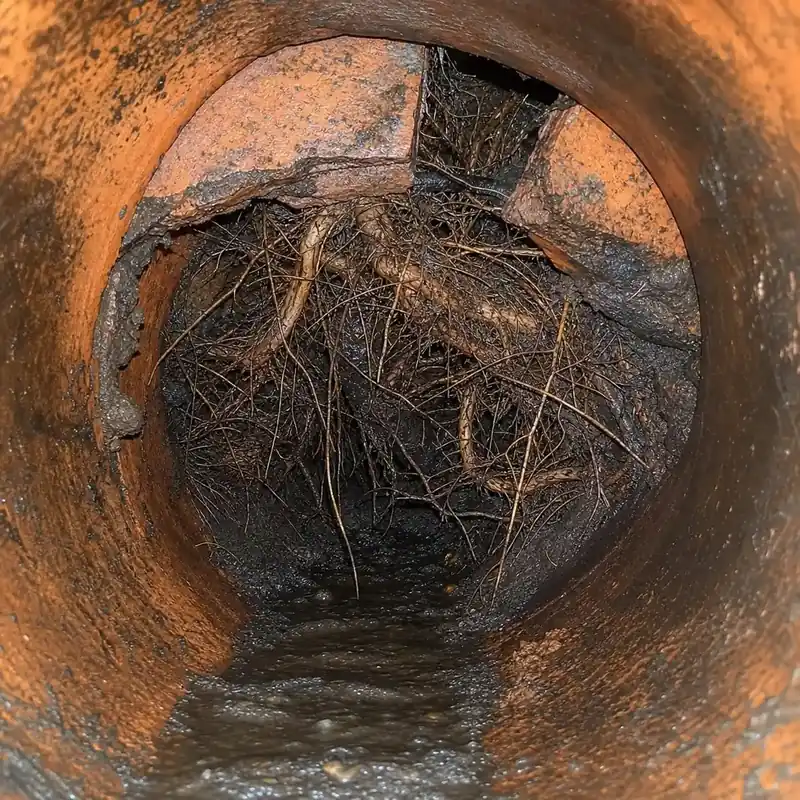
Tree roots at a clay joint. Denver's pre-1960 neighborhoods run vitrified clay laterals with a joint every few feet, under mature elms, cottonwoods and silver maples. Roots enter the joints and then act as a net, catching everything that passes. This is the most common cause of a full main-line blockage in this city.
Scale in cast iron. Homes built before about 1950 often have cast iron. It corrodes from the inside and the surface goes rough, so the pipe both narrows and catches material. Descaling restores diameter where the wall is still sound.
Wipes and grease. In newer housing on PVC, roots are rarely the story. What restricts those lines is what goes down them: kitchen grease coating the wall, and wipes marked flushable that never break down.
A belly. A settled low section that holds standing water, so solids drop out instead of being carried through. This one produces a blockage on a predictable cycle, which is its signature.
Deformed Orangeburg. Bituminized fibre pipe used roughly 1945–1972. It ovals under load rather than cracking. If a house of that era has repeat main-line trouble with no clear cause, this is worth ruling out.
Your line, or the city's?
Worth knowing before you call anyone, because it decides who is responsible.
The sewer lateral, the pipe from your house to the connection at the public main, is generally the property owner's responsibility. The main in the street is the utility's.
The practical test is simpler than the org chart. If the problem is only at your property, it is almost certainly your lateral. If neighbours on the same block are having the same trouble in the same week, that points downstream and is worth reporting to the utility.
A camera inspection settles it either way, by showing where the restriction actually sits. That matters most when the answer is not obvious, because it is the difference between fixing your problem and paying for someone else's.
What a camera inspection shows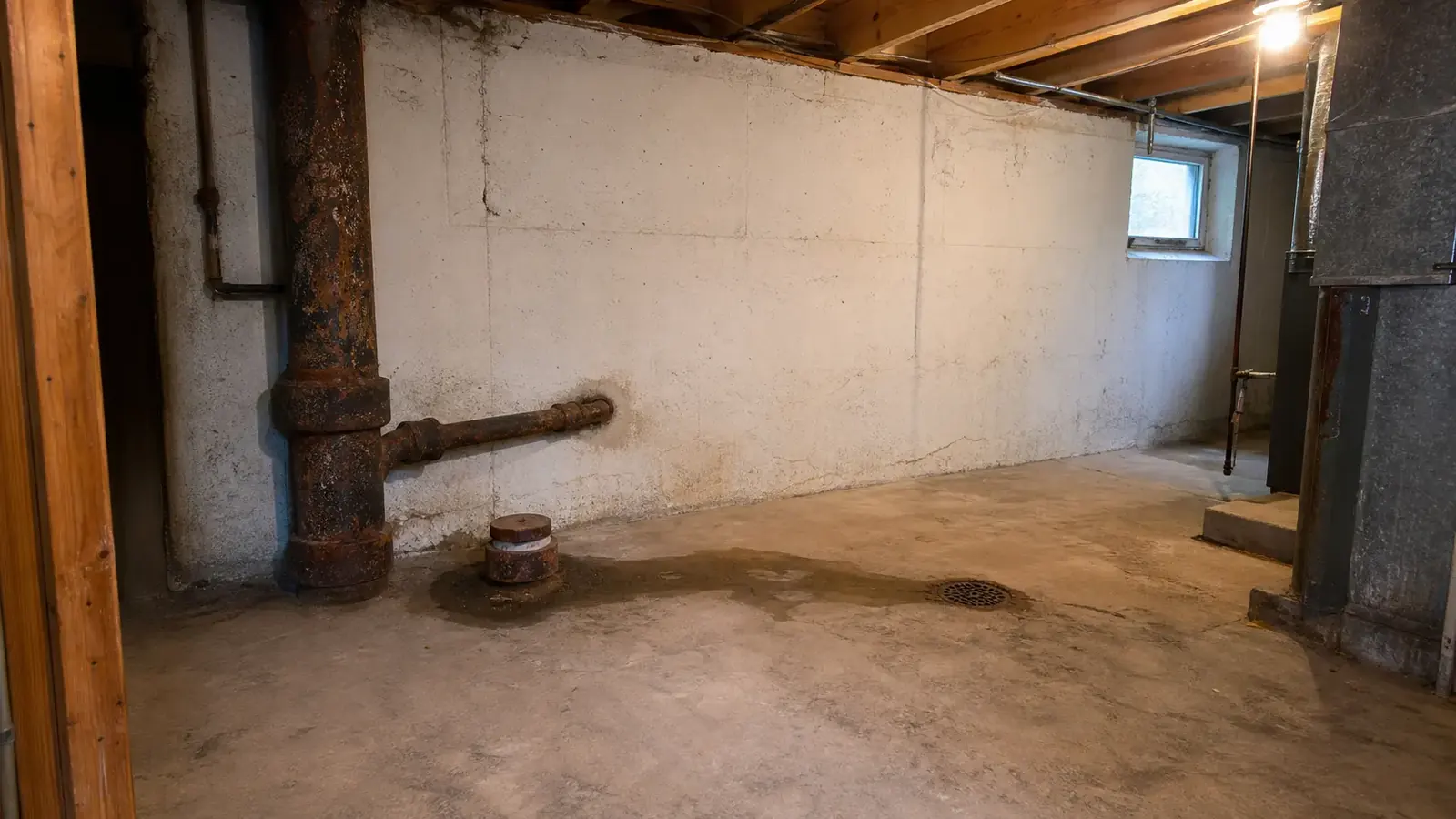
How this actually gets dealt with
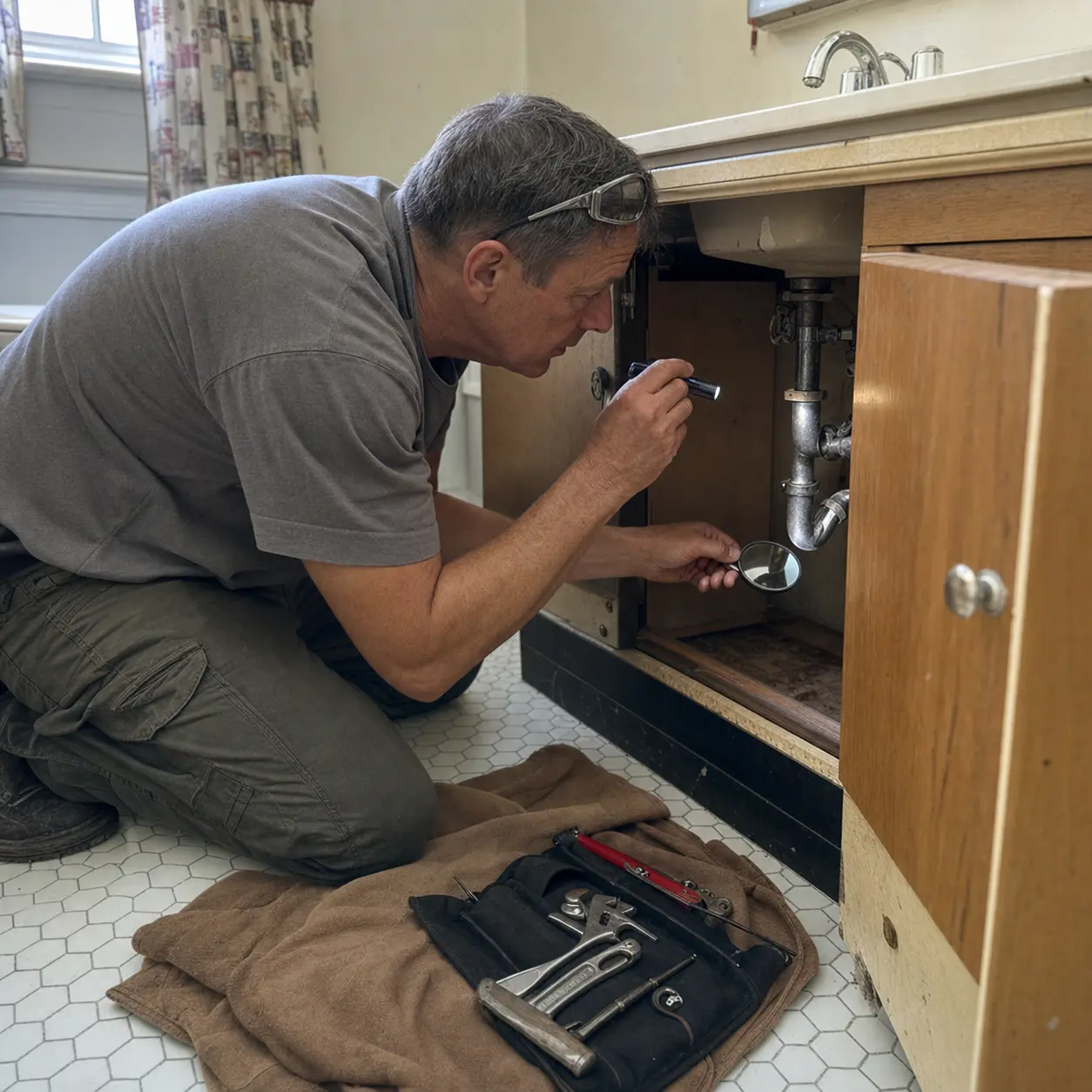
Confirm it is the main line
Which fixtures are affected and how they behave when others run. A floor drain backing up alongside other fixtures is a main-line answer.
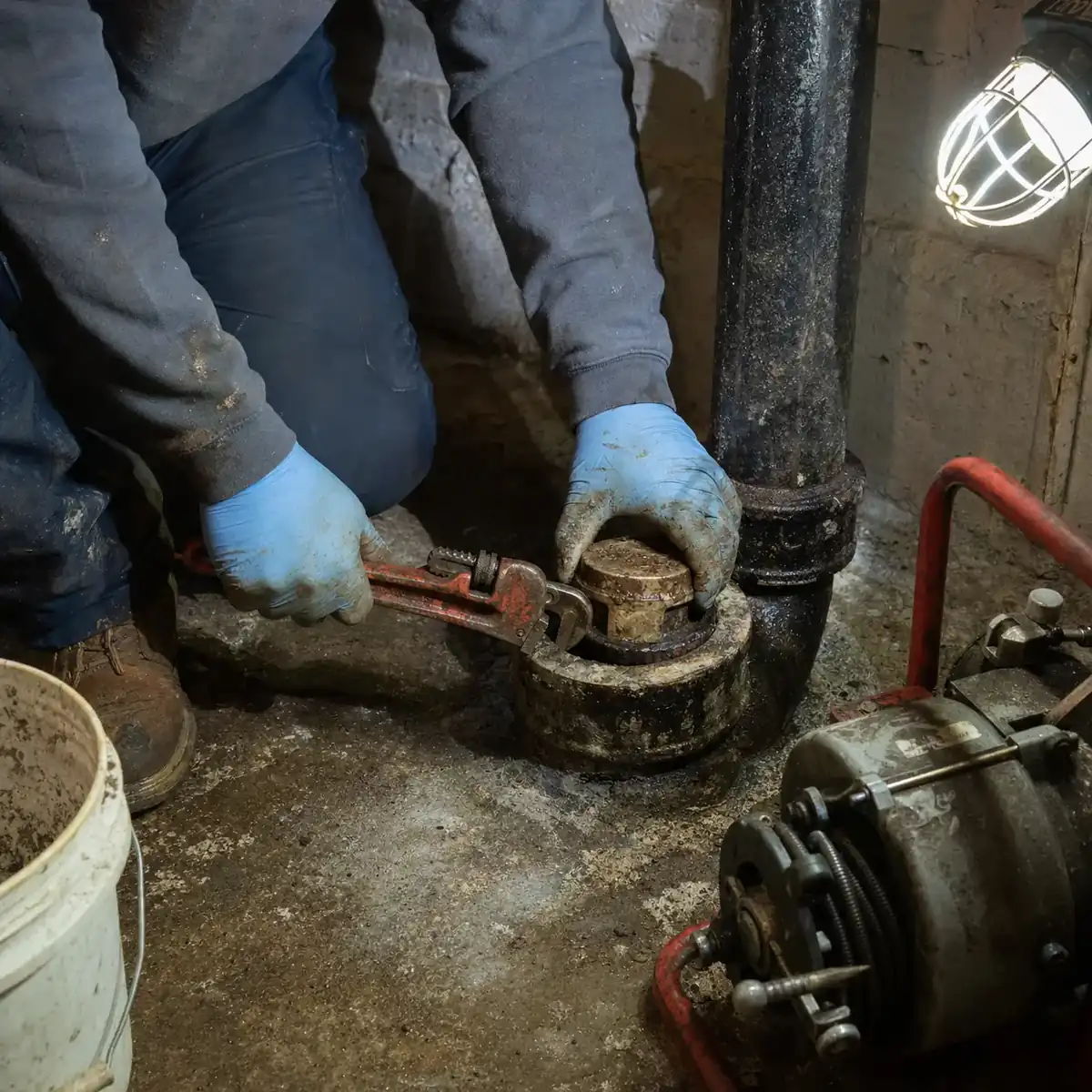
Reach the line properly
Through a cleanout wherever one exists. The job is the line beyond the floor drain rather than the drain itself.
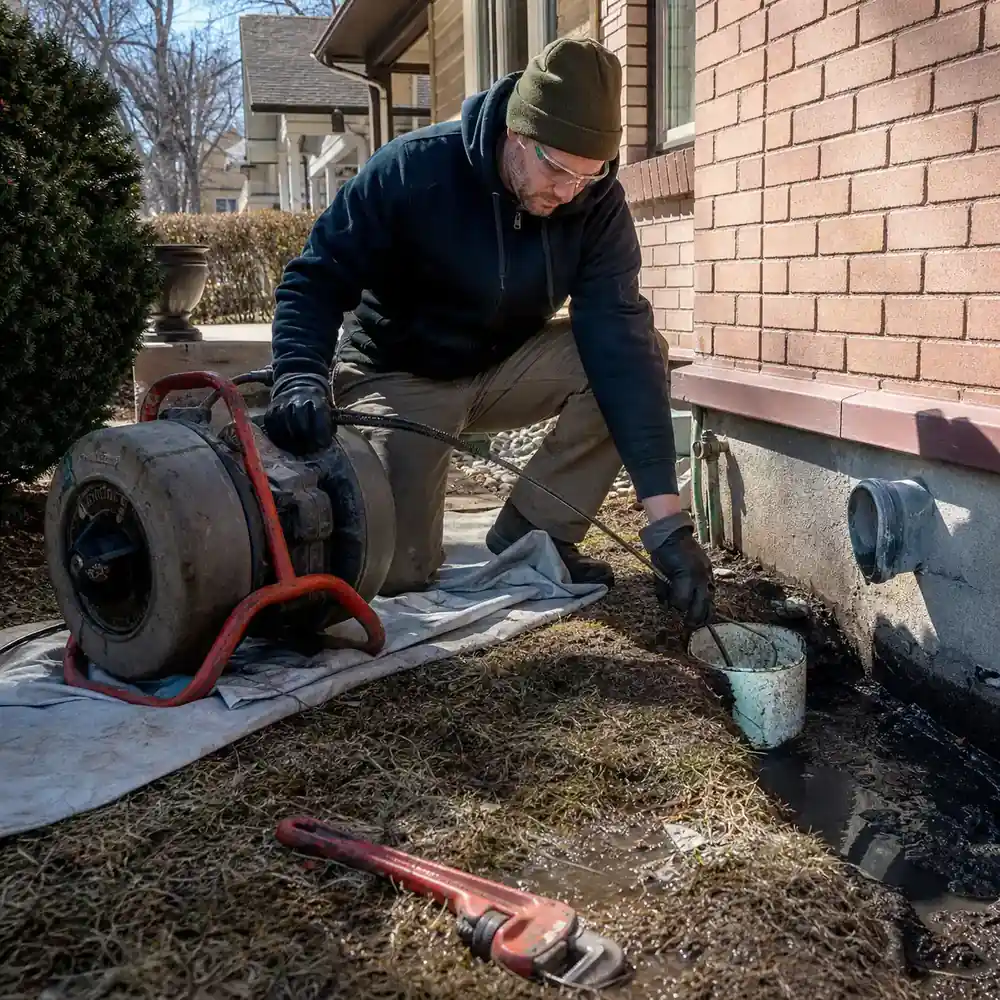
Clear it with the right head
Cable and cutting head sized to the pipe. A retrieval head pulls material back; a cutting head shears roots at the wall. Using the wrong one is how a line gets cleared and blocks again in a fortnight.
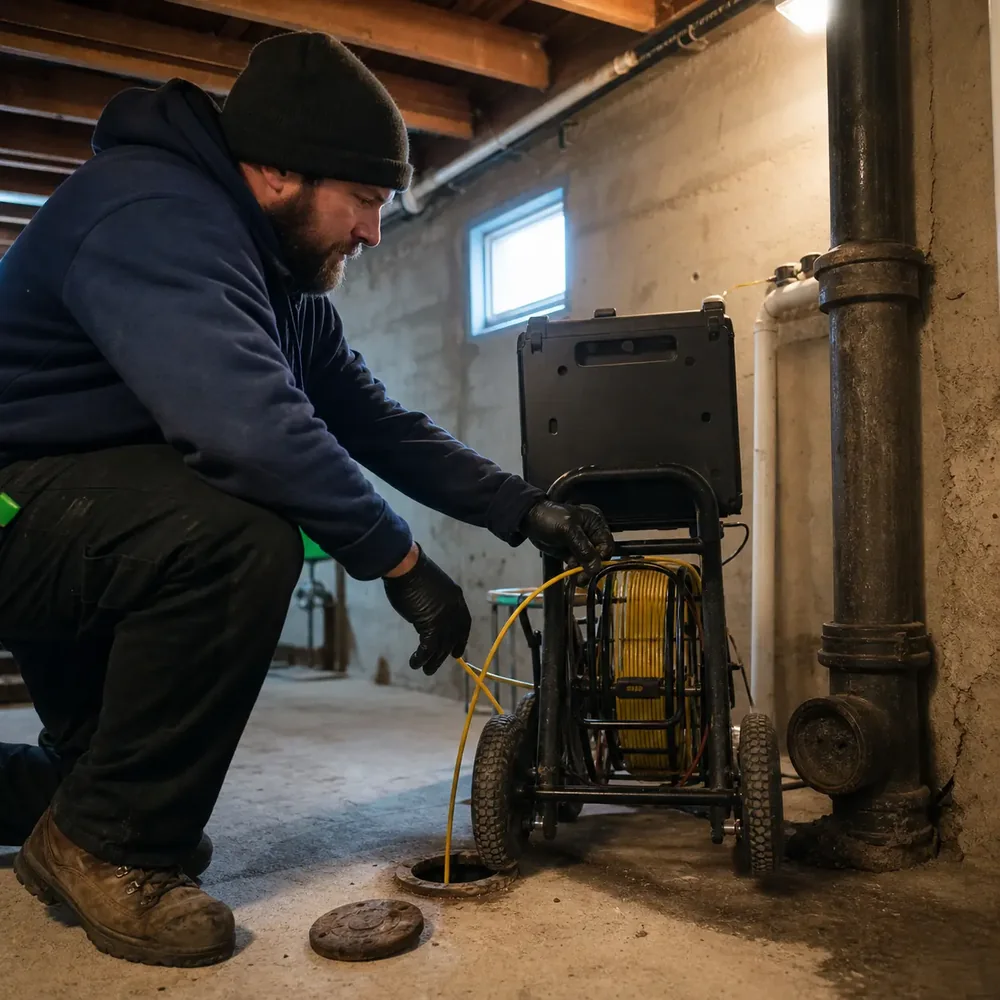
Find out why it blocked
Clearing tells you the line flows again. A camera tells you why it stopped, and whether this is a once-a-decade event or a three-month cycle.
Get the main line cleared
Tell us which fixtures are affected, whether there is standing water, and roughly when the house was built. That is usually enough to tell us what we are dealing with before anyone is on site.
We look at the problem first, explain what is involved, and give you the price. Work only begins after you say yes. If the line turns out to be a different job once it is open, we stop and tell you rather than carrying on and adding it to the bill.
- Which fixtures are affected, and in what order
- Whether there is standing water or sewage
- Roughly when the house was built
- The price before any work starts
You might actually need
Emergency drain service
If it is actively backing up, or wastewater is reaching finished living space, start here.
See emergency service →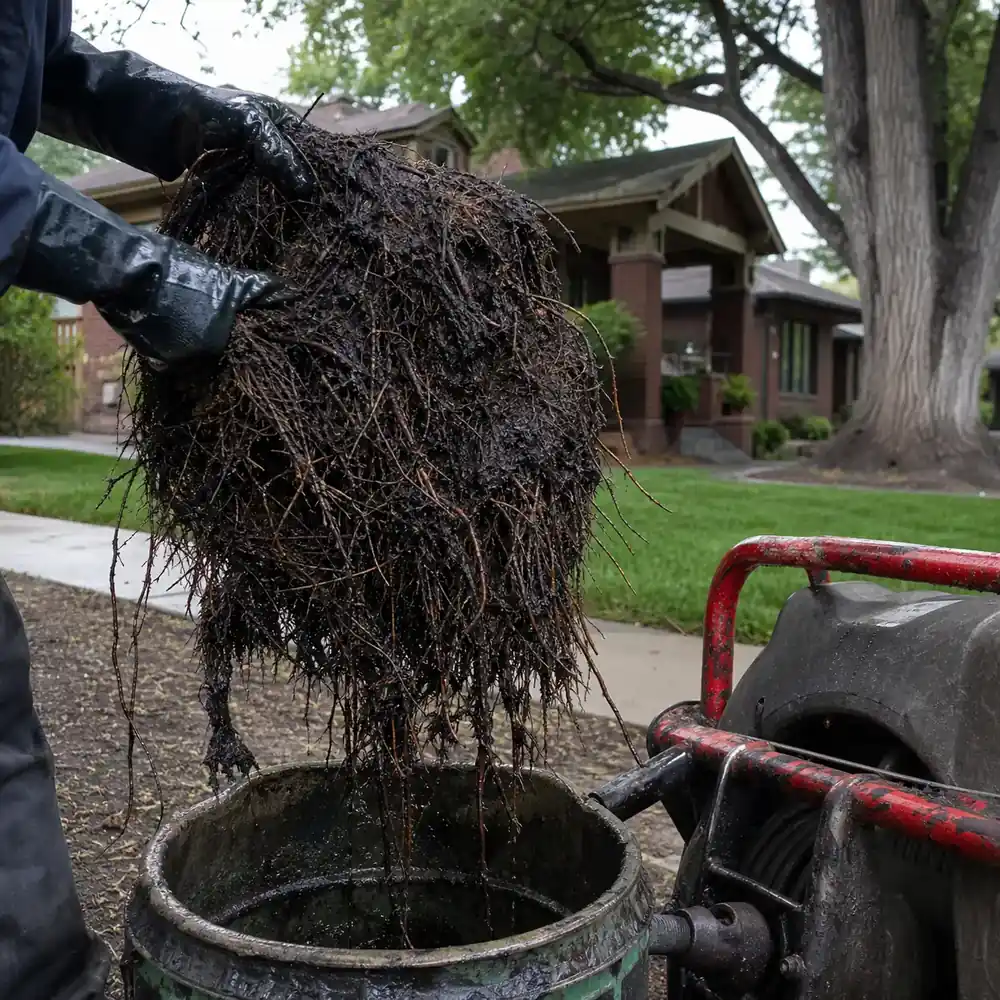
Rooter service
Most floor drain backups end up here: the main sewer line, and in Denver usually roots at a clay joint.
See rooter service →Sewer camera inspection
Shows why it blocked and whether it will happen again, which clearing on its own cannot tell you.
See camera inspection →Common questions
Why is my basement floor drain backing up?
Because something between that drain and the city main is restricted. The floor drain is normally the lowest opening in the system, so it is where water surfaces when the line cannot take what the house is sending. The floor drain itself is rarely the actual problem.
Can I fix a backed-up floor drain myself?
Usually not, and plunging the floor drain generally achieves nothing because the blockage is not there. It is in the main line beyond it. What you can usefully do is stop all water use in the house immediately, which stops the situation getting worse.
Why did it back up when I ran the washing machine?
A washer discharges a large volume of water very quickly. A line that is restricted but coping with normal use cannot clear that volume fast enough, so it surfaces at the lowest opening. The washing machine did not cause the blockage; it revealed one that was already there.
It drained away on its own. Is it fixed?
No. That is the restriction slowly passing what was behind it once you stopped adding water. The blockage is still there and the same thing will happen again, usually sooner than the first time. It is worth dealing with before it happens with a full house.
My floor drain smells but nothing is backing up. Same problem?
Probably not. A floor drain has a trap that holds water to block sewer gas, and in a dry basement that water evaporates. Pour a bucket of water down it. If the smell goes away, that was a dry trap rather than a blockage.
Is a floor drain backup my responsibility or the utility's?
The sewer lateral from your house to the public main is generally the property owner's; the main in the street is the utility's. If only your property is affected it is almost certainly your lateral. If neighbours on the block have it at the same time, that points downstream. A camera inspection confirms where the restriction sits.
Will it keep happening?
That depends entirely on why it blocked, which is what a camera run answers. Roots at a joint will come back on a cycle. A one-off obstruction will not. Clearing alone tells you the line flows again; it does not tell you which of those two you have.
Question not answered here? Ask it by phone on (720) 794-0974.
Across the Denver metro
If your area is not listed, call and ask. It takes ten seconds to check.
Get the line cleared
Call and tell us which fixtures are affected, whether there is standing water, and roughly when the house was built.
Call about a backup