
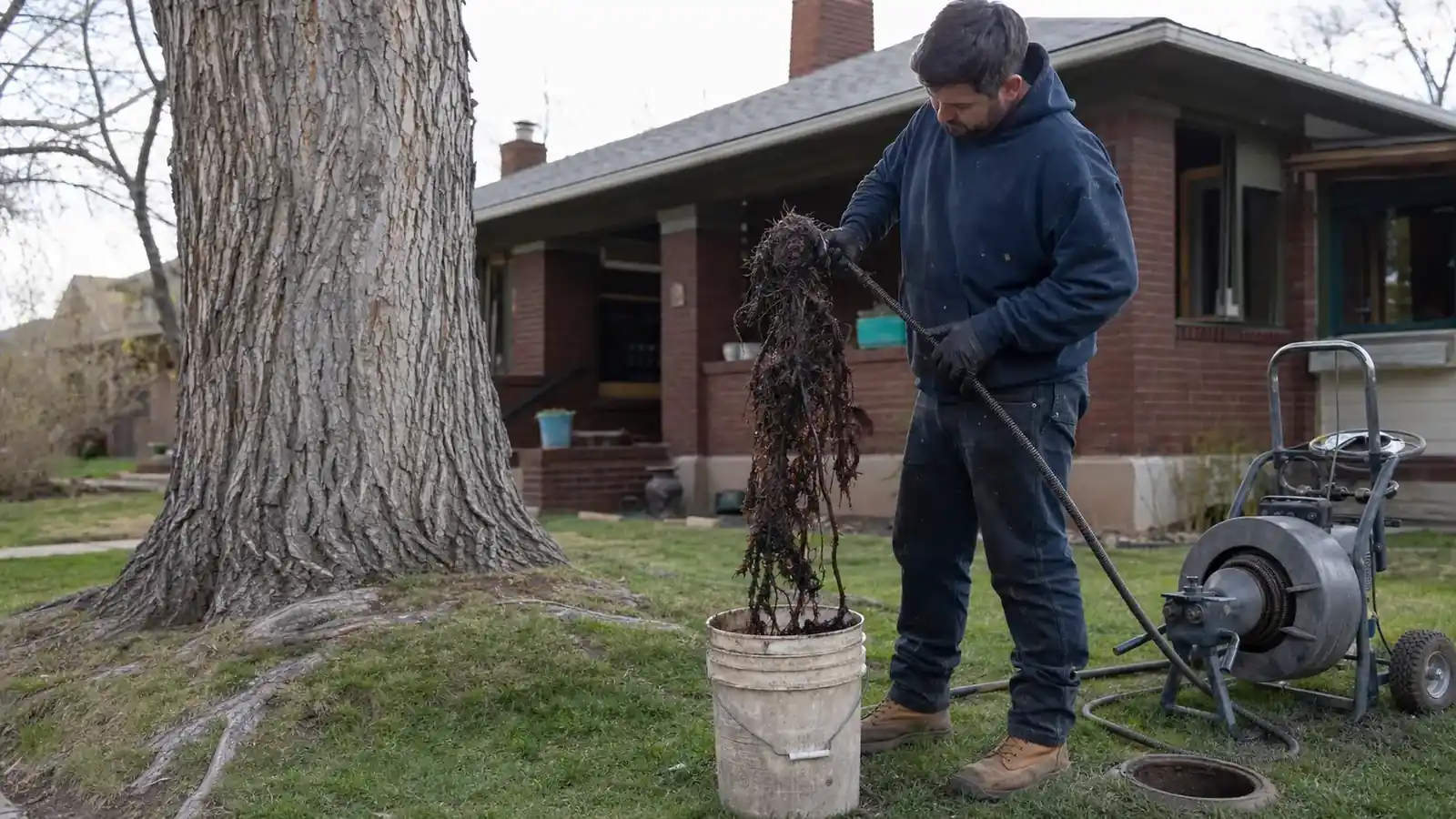
Rooter service in Denver
- Main lines & laterals
- Root cutting
- Camera available
Main sewer line clearing for root-blocked laterals. In Denver that usually means elm and maple roots at a pre-1960 clay joint.
Call (720) 794-0974Same clog every few months? That pattern is worth a phone call.
Call (720) 794-0974What rooter service does
"Rooter" is category language rather than a technical term. It came from the machines built to cut roots out of sewer lines, and it stuck as shorthand for main-line clearing generally.
Practically, it's a different job from clearing a fixture. A sink machine runs maybe 25 or 50 feet of quarter-inch cable, enough for a branch line. A main line is 3, 4 or 6 inches in diameter and can run 60 to 100 feet or more from the house to the city main. That needs a sectional or drum machine with heavier cable and a cutting head matched to the pipe diameter.
The head is the part that matters with roots. A retrieval head pulls material back. A cutting head shears roots off flush at the pipe wall. Using one where you need the other is how a line gets "cleared" and blocks again a fortnight later.
Access is usually a cleanout: an exterior capped fitting or a basement fitting on the main stack. If a home has no accessible cleanout, that changes the job, and we'll tell you before starting rather than after.
Rooter service at a glance
- What it's for
- Main sewer line and lateral blockages, especially root intrusion at clay joints
- The signal
- A clog that returns on a schedule, or more than one fixture affected at once
- Equipment
- Sectional or drum machine, heavy cable, cutting head sized to a 3, 4 or 6-inch pipe
- Access
- Exterior or basement cleanout where one exists. No cleanout changes the job and the price
- What it doesn't do
- Repair the pipe. Clearing restores flow; the joint roots entered through is still there
- Usually paired with
- A camera run, to see whether it's one joint or a failing line
Why tree roots keep getting into Denver sewer lines
This is a genuinely local problem, and the reason is a specific combination.
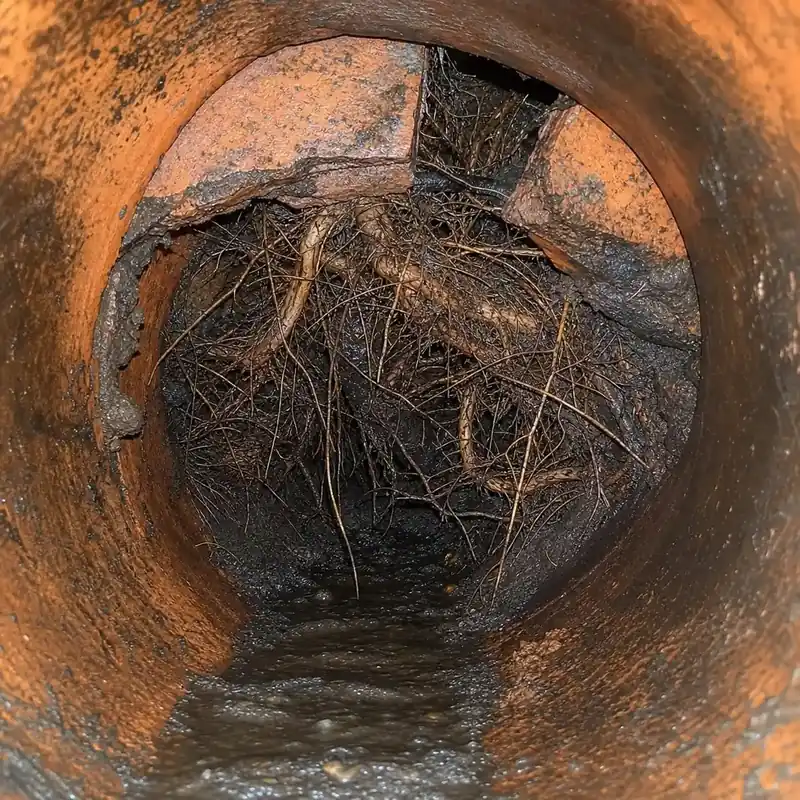
Denver's older neighborhoods were built out with vitrified clay sewer laterals, the standard before plastic. Clay pipe comes in short sections, so a run to the street has a joint every few feet. Those joints were never watertight in the way a fused PVC line is.
Above them sit the trees the city planted through the same decades: Siberian elms, plains cottonwoods and silver maples. All three are aggressive, shallow-rooting, and thirsty in a semi-arid climate.
A sewer lateral is a warm, moist, nutrient-rich line running through otherwise dry Front Range soil. Roots follow moisture gradients. A joint that weeps slightly is a signal, and a root hair fine enough to enter it will thicken over years until the joint is packed.
Once roots are established they act as a net. Grease, paper and solids that would otherwise pass catch on the root mass, and the line blocks, usually not from roots alone but from what the roots collected.
That's why root blockages cluster in spring. Root growth accelerates as soil warms, and lines that limped through winter stop coping.
One caveat worth stating plainly: this is a common regional pattern, not a diagnosis of your line. Plenty of Denver homes on old clay have no root problem at all, and newer homes on PVC occasionally do where a joint has been damaged. What's true of the neighborhood isn't necessarily true of the house.
Signs it's the main line, not a fixture clog
More than one fixture is affected. The clearest signal. Two or more drains behaving badly means the problem is downstream of both.
The toilet gurgles when the washing machine drains. Fixtures talking to each other through a shared line. Air is being displaced past a restriction.
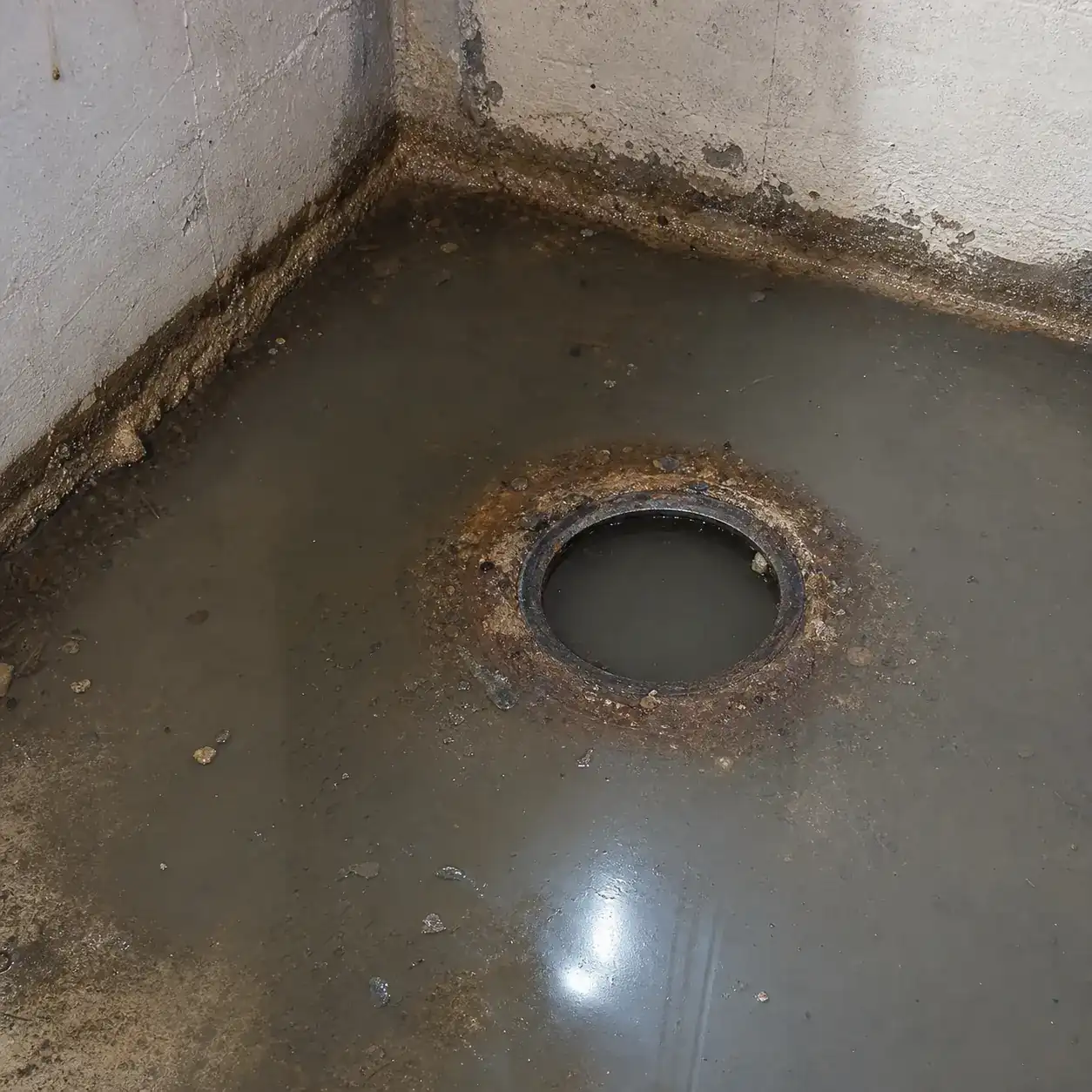
The basement floor drain backs up first. It's usually the lowest opening in the system, so it shows main-line restriction before anything upstairs does.
The lowest fixtures suffer most. Ground-floor and basement drains slow before upstairs ones.
It returns on a schedule. Every spring. Every six months. Predictable timing points to a cause that regrows or reaccumulates, which is the root signature.
What clearing roots does and doesn't solve
Straight answer: cutting roots restores flow. It does not repair the joint they came through.
The roots are inside the pipe because there's a way in. Cutting them back reopens the line and buys time, often a year or more, but the entry point is unchanged, and roots regrow toward it.
That's not a reason to skip clearing. When a line is blocked, clearing it is exactly the right first move. It's a reason to know which situation you're in afterwards, because the follow-up differs:
- Roots in one joint, pipe otherwise sound: periodic clearing is a reasonable long-term approach
- Roots at multiple joints, or a joint that's separated: clearing is a holding action and it's worth understanding the repair options
- A section that's collapsed or badly deformed: no amount of cabling addresses that
A camera inspection is how you tell them apart. We'd rather you knew which one you have than paid us to clear the same line indefinitely without ever finding out.
Spring is root season in Denver
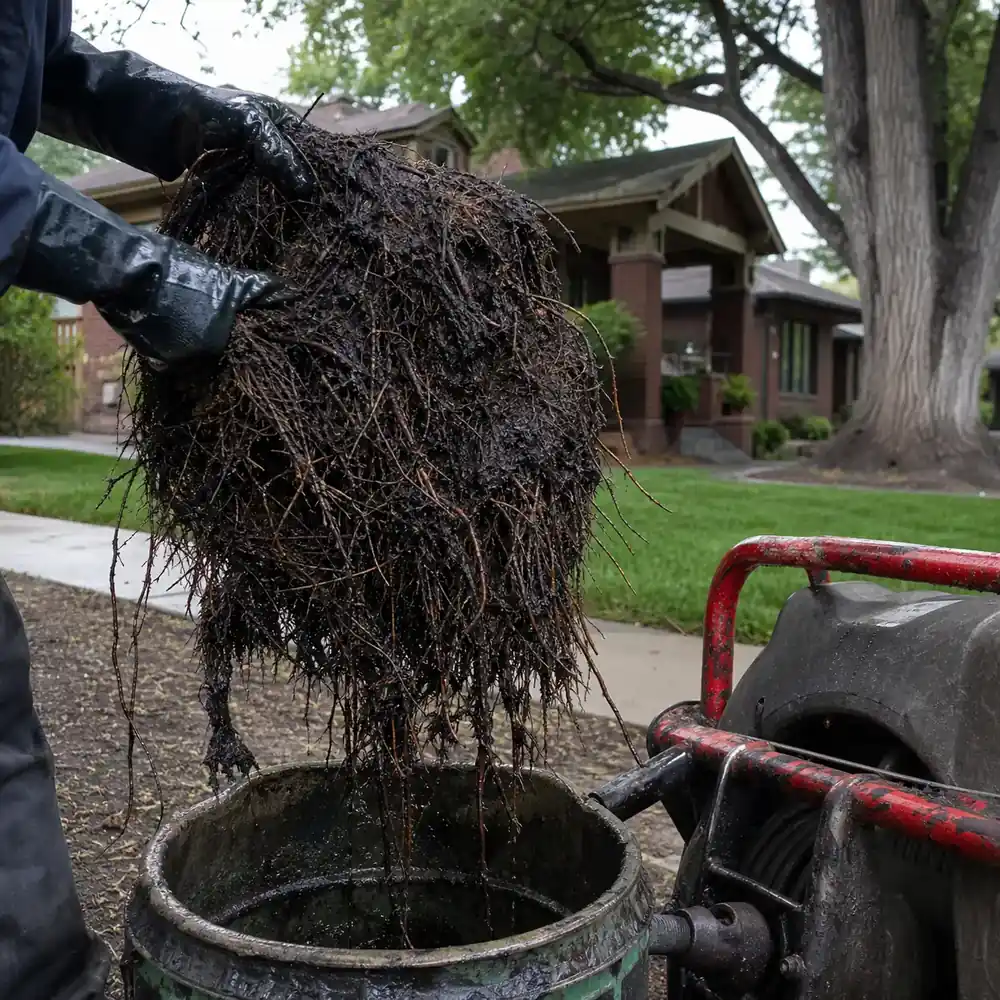
Root-related main-line calls rise sharply as soil warms and root growth restarts. A line that drained acceptably through winter can go from slow to blocked in a few weeks.
If your line has a known root history, late winter is a sensible time to deal with it: before growth accelerates, and before it becomes an emergency on a weekend.
That is not a maintenance plan we are selling. It is just when the work is easiest to book.
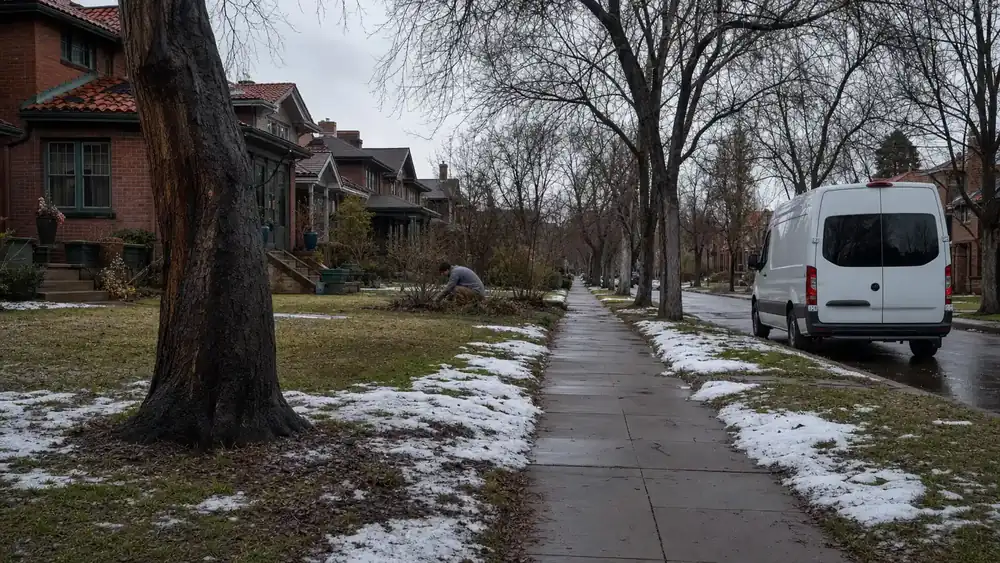
Deal with a recurring main-line blockage
A clog that returns on a schedule is information. Describe the pattern and we will tell you what it usually means.
We look at the problem first, explain what is involved, and give you the price. Work only begins after you say yes. If the line turns out to be a different job once it is open, we stop and tell you rather than carrying on and adding it to the bill.
- How often it blocks, and roughly when it started
- Whether more than one fixture is affected
- Roughly when the house was built
- The price before any work starts
Water backing up right now?
Stop using the fixtures nearby, including toilets and the washing machine, and keep people and pets away from any standing wastewater. Then call and we'll work out what's happening.
Rooter service questions
Why do tree roots keep clogging my sewer line?
Because there's a way in and a reason to come. Denver's pre-1960 clay laterals have a joint every few feet, and mature elms, cottonwoods and silver maples root aggressively toward the moisture. Cutting roots reopens the line; it doesn't close the joint they entered through.
How is rooter service different from drain cleaning?
Scale, mostly. Drain cleaning usually means a fixture or branch line with a sink-sized machine. Rooter service means the main sewer line: heavier cable, cutting heads sized to a 4-inch pipe, and access through a cleanout rather than a fixture. Different problem, different equipment.
How do you remove roots from sewer pipes?
A powered cable feeds a cutting head down the line, shearing roots off flush at the pipe wall as it travels. The cut material is pulled back or flushed through. Jetting afterwards can clean up fine root hair and the residue roots anchored to.
Do you camera-inspect the line after clearing it?
We can, and with root problems it's usually worth it. Clearing tells you the line flows again; a camera tells you why it blocked and whether it's one joint or several. Ask when you call and we'll cover what's included.
How often will a root-prone line need clearing?
It varies with how much root is getting in and how fast it regrows. Some lines go years; some need it annually, often in spring. If yours is on a short cycle, that's information. It usually means more than one joint is involved.
Will cutting the roots damage my pipe?
A cutting head sized correctly to the pipe cuts roots at the wall, which is what it's designed for. On a pipe that's already compromised, a separated joint, badly deteriorated clay, any mechanical clearing carries more risk, which is another reason knowing the line's condition matters.
You might actually need
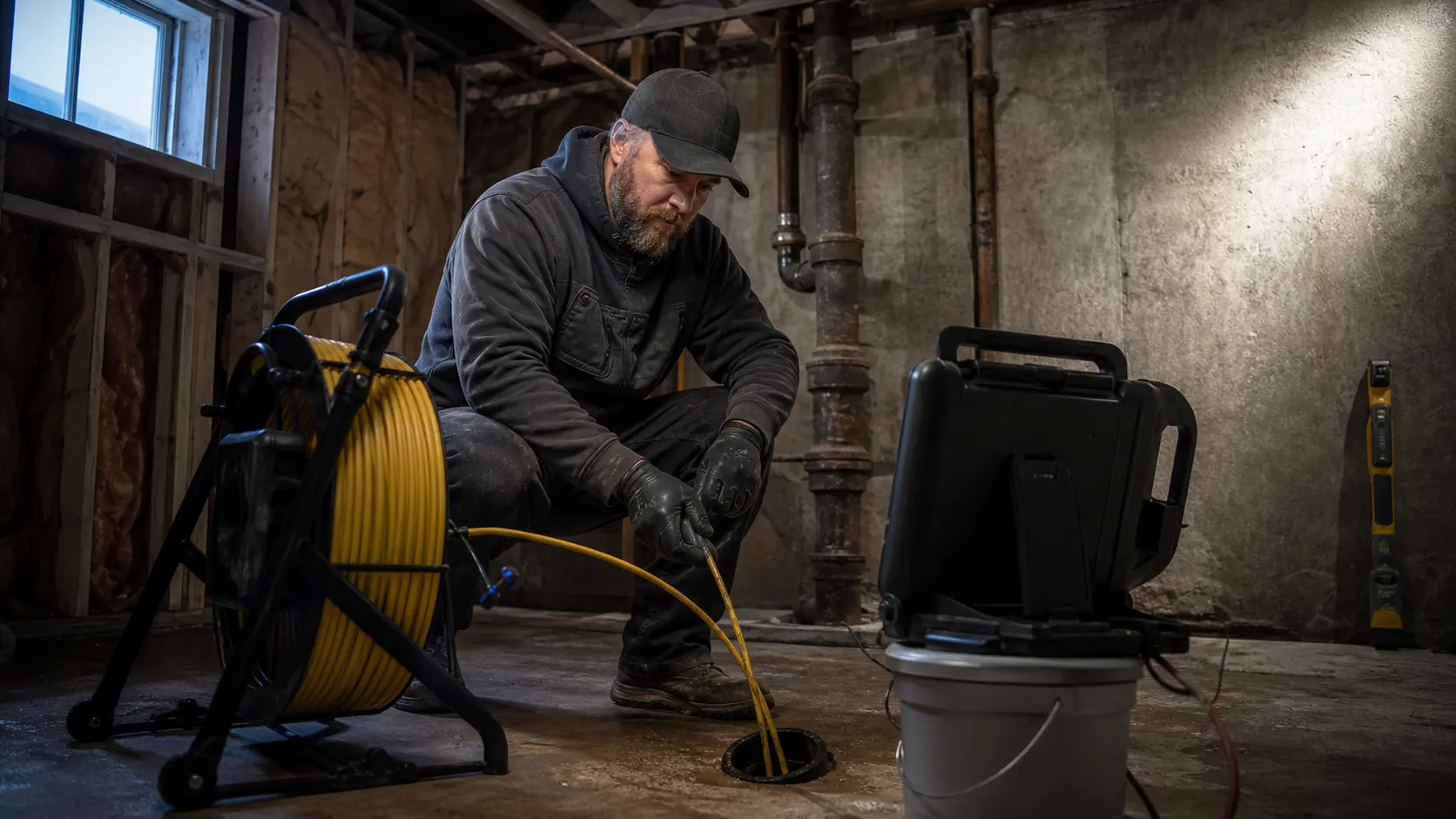
Sewer camera inspection
One joint or several? Sound pipe or failing? A camera settles it before anyone spends more money.
See sewer camera inspection →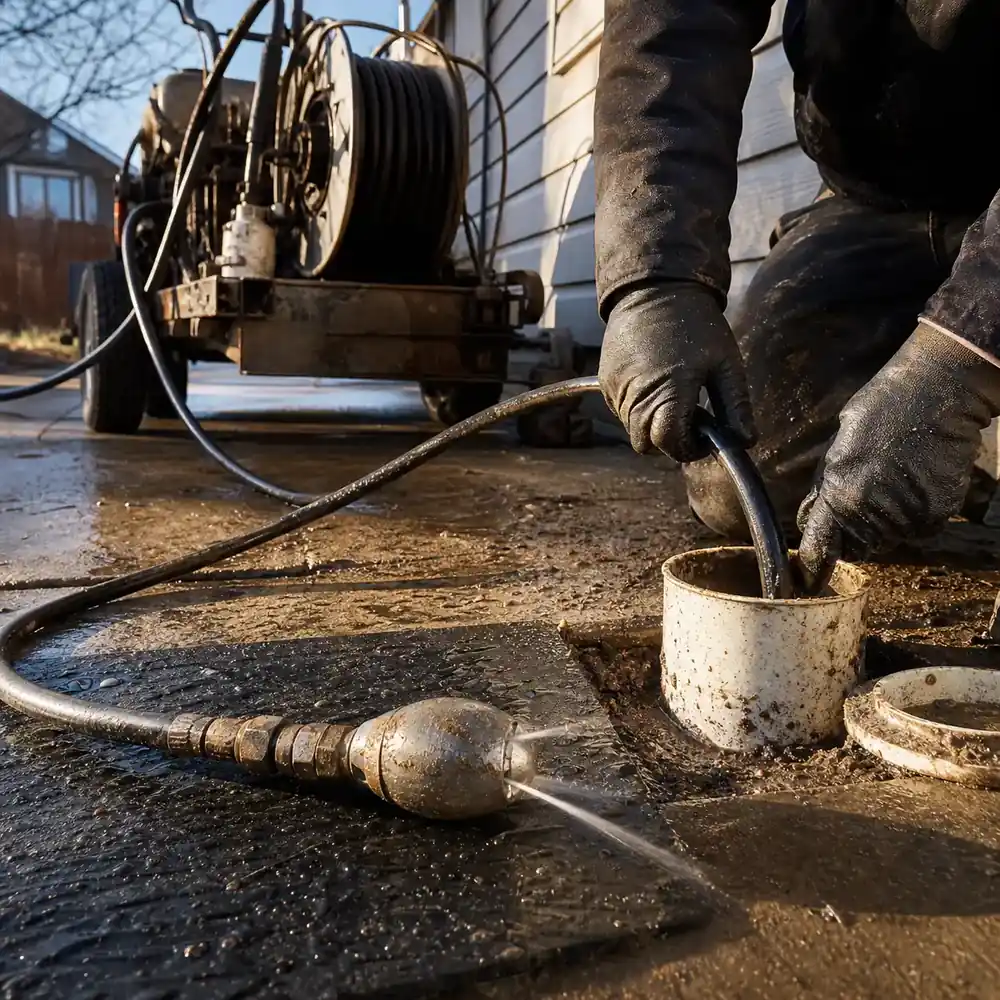
Hydro jetting
Cleans up fine root hair after a root cut, where the line condition can take the pressure.
See hydro jetting →Emergency drain service
If the line is actively backing up right now rather than slowly getting worse.
See emergency drain service →Rooter and main-line service across the Denver metro
We clear root-blocked sewer laterals in these areas. If yours is not listed, call and ask.
Dealing with a recurring main-line blockage?
Call and describe the pattern: how often, which fixtures, and what's been done before. That usually tells us a lot before anyone's on site.
Call (720) 794-0974