
Sewer camera inspection in Denver, CO
- Locate & measure
- Pipe condition
- Pre-purchase scopes
A camera down the line so nobody has to guess. See where the blockage sits, what the pipe is made of, and why the clog keeps coming back.
Call (720) 794-0974Want to know what is actually in the line? Ask about a camera inspection.
Call (720) 794-0974How a camera inspection works
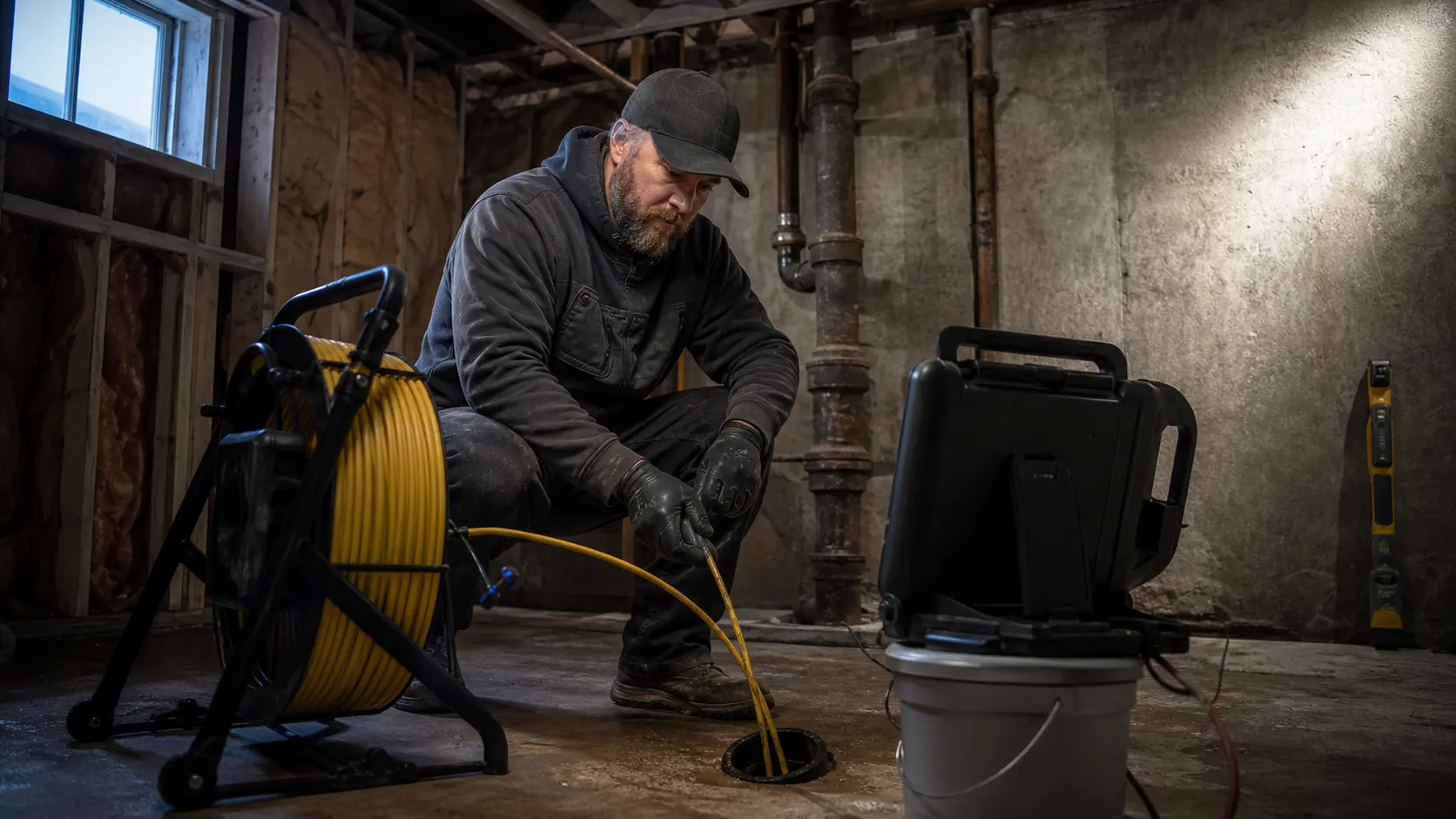
A self-levelling camera head on a semi-rigid push rod goes into the line, usually through a cleanout. The image comes back in real time to a monitor, and the rod is marked so the operator knows how far in the camera has travelled.
That distance figure is the useful part. If something shows up at 47 feet, that's 47 feet of pipe from the access point, which, combined with the run of the line, puts it in a specific place.
For above-ground locating, the camera head carries a sonde, a small transmitter. A locator at the surface picks it up and marks the position and approximate depth on the ground. That's how a problem gets pinpointed without excavating to find it.
It's non-invasive. Nothing gets dug and nothing gets cut to look.
One honest limit: a camera shows what the camera can see. A line full of standing water, heavy grease or a hard blockage may need clearing before there's anything to look at, which is why a camera run often follows a cable rather than preceding it.
Camera inspection at a glance
- What it's for
- Finding out what is actually in the line, and where, before anyone spends money on it
- Equipment
- Self-levelling camera head on a push rod, with a sonde and a surface locator for pinpointing
- What it finds
- Root intrusion, offset joints, bellies, scale, cracks, deformed Orangeburg, collapsed sections
- Common uses
- Repeat blockages, pre-purchase sewer scopes, verifying a line after clearing, settling who owns a fault
- Non-invasive
- Nothing gets dug and nothing gets cut in order to look
- Its limit
- It can't see through standing water or a hard blockage. Sometimes clearing has to come first
What a camera inspection can show
Root intrusion, and where. Not just that roots are present, but which joint, how far in, and whether it's one location or several. That distinction changes what happens next.
Offset or separated joints. Where sections have shifted, common in older clay as soil moves.
Scale and buildup. How much of the pipe's internal diameter is actually left in older cast iron.
Bellies. A low section holding standing water, so solids settle instead of passing. A belly causes recurring blockages that clearing never permanently fixes, because the cause is the pipe's shape.
Collapsed or deformed sections. Including Orangeburg, below.
Foreign objects. Things that went down a toilet and stopped.
Pipe material and transitions. Many Denver homes have more than one material in a single run. Cast iron under the house transitioning to clay at the property line is a classic. Transitions are frequently where problems start.
Where the blockage actually is. Which is often the whole point: not guessing, and not paying to excavate the wrong stretch.
Denver pipe materials and what they mean
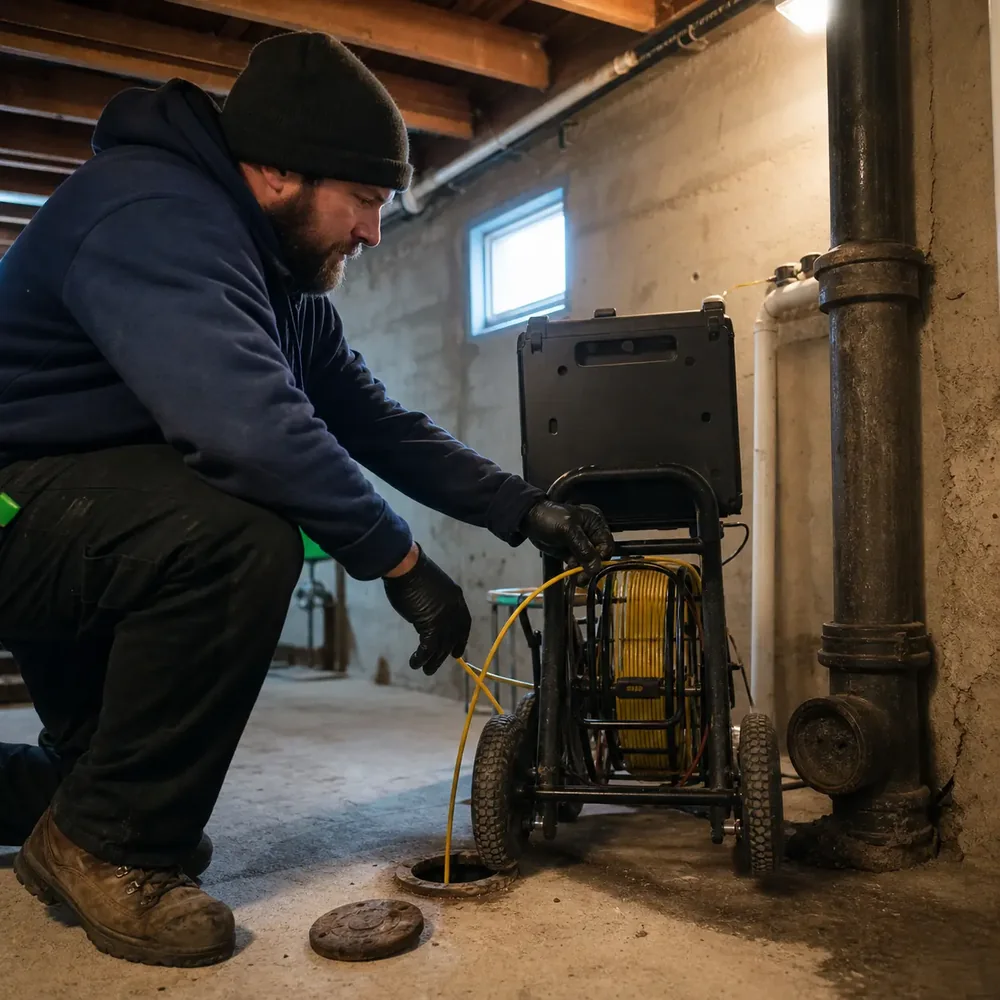
Vitrified clay: the standard for laterals in pre-1960 Denver. Durable but jointed every few feet, and the joints are the weakness. This is where the city's root problem lives.
Cast iron: common in pre-1950 housing. Strong, but it scales internally over decades and eventually corrodes from the inside. A camera shows how much usable diameter is left.
Orangeburg: bituminous fibre conduit, essentially tar-impregnated wood pulp, used widely in Denver builds from roughly 1945 to 1972. It was never meant to last this long. It softens, deforms into an oval and eventually collapses. If a home is from that era and has a recurring main-line problem with no obvious root cause, Orangeburg is worth ruling in or out, and a camera is the only way to do it. Finding it changes the conversation from cleaning to replacement.
PVC and ABS: post-1980 builds like Central Park and Green Valley Ranch. Smooth, fused, and generally robust. Problems here are usually grease, wipes and objects rather than the pipe itself.
Buying a home in Denver? Scope the line first
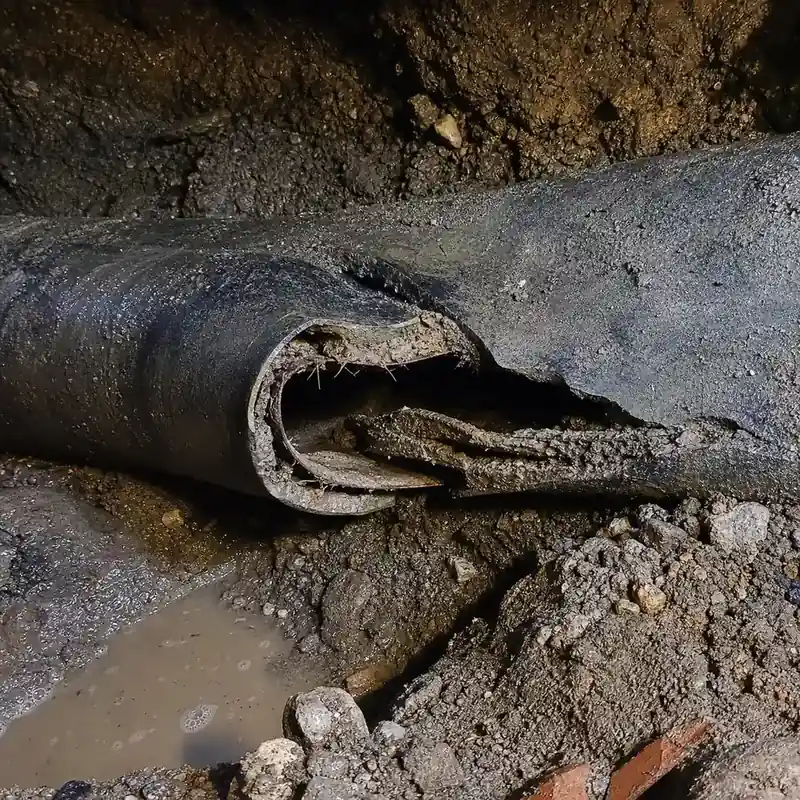
A standard home inspection does not include the sewer lateral. The inspector looks at what's visible; the line from the house to the city main isn't.
That's a meaningful gap, because a lateral replacement is one of the larger unbudgeted expenses a buyer can inherit, and nothing about the house's appearance predicts it. A beautifully renovated 1925 bungalow can have an untouched original clay lateral packed with roots.
A pre-purchase sewer scope answers it during the inspection contingency window, while there's still room to negotiate. On an older Denver home, anything pre-1980, and especially anything from the Orangeburg era, it's a small cost against the size of the thing it rules out.
We also work with realtors who want the line checked as a matter of course on older listings. If that's you, call and we'll go through scope and turnaround.
Who owns the sewer lateral in Denver?
Generally, in most jurisdictions, the property owner is responsible for the sewer lateral, the pipe from the building to the connection at the public main, while the utility is responsible for the main itself. Where exactly that boundary falls, and who pays for what at the connection, varies by city and sometimes by the age of the connection.
Before assuming, check with Denver's wastewater utility for your specific address. It matters, because it decides whether a problem is yours to fix or theirs.
Put a camera in the line
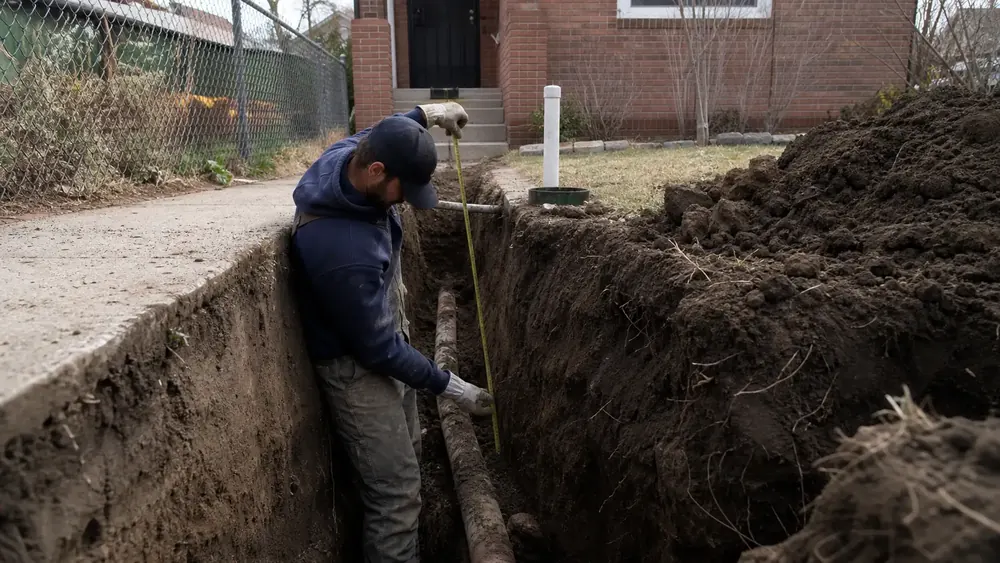
The point of a camera is to stop guessing. Tell us what keeps happening and we will tell you whether looking is worth it yet.
We look at the problem first, explain what is involved, and give you the price. Work only begins after you say yes. If the line turns out to be a different job once it is open, we stop and tell you rather than carrying on and adding it to the bill.
- What the recurring problem actually is
- Whether the line has been cleared before
- Whether this is for a purchase, a dispute or a repeat clog
- The price before any work starts
Water backing up right now?
Stop using the fixtures nearby, including toilets and the washing machine, and keep people and pets away from any standing wastewater. Then call and we'll work out what's happening.
Camera inspection questions
Who is responsible for the sewer lateral in Denver, me or the City?
Generally the property owner is responsible for the lateral from the building to the public main, and the utility for the main itself. The exact boundary varies by jurisdiction. Check with Denver's wastewater utility for your address before assuming. It decides who pays.
Do you camera-inspect the line after clearing it?
We can, and after a main-line clearing it's usually worth it. Clearing tells you the line flows; a camera tells you why it blocked and whether the cause is one joint, several, or something structural. Ask when you call and we'll cover what's included.
What is Orangeburg pipe and why does it matter in Denver?
Orangeburg is bituminous fibre conduit, tar-impregnated wood pulp, used in Denver builds from roughly 1945 to 1972. It deforms and collapses with age. If a home from that era has recurring main-line problems with no clear root cause, a camera can confirm or rule it out.
Will a camera tell me exactly what's wrong?
It shows what the camera can see, which is usually a lot: roots, offsets, bellies, scale, material and where they are. It can't see through standing water, heavy grease or a solid blockage. Those may need clearing first. And it shows condition, not always cause.
Do I need a sewer scope before buying a Denver home?
A standard home inspection doesn't include the sewer lateral, and a lateral replacement is a large unbudgeted expense. On anything pre-1980 it's worth doing inside the inspection contingency window, while you still have room to act on what it finds.
You might actually need
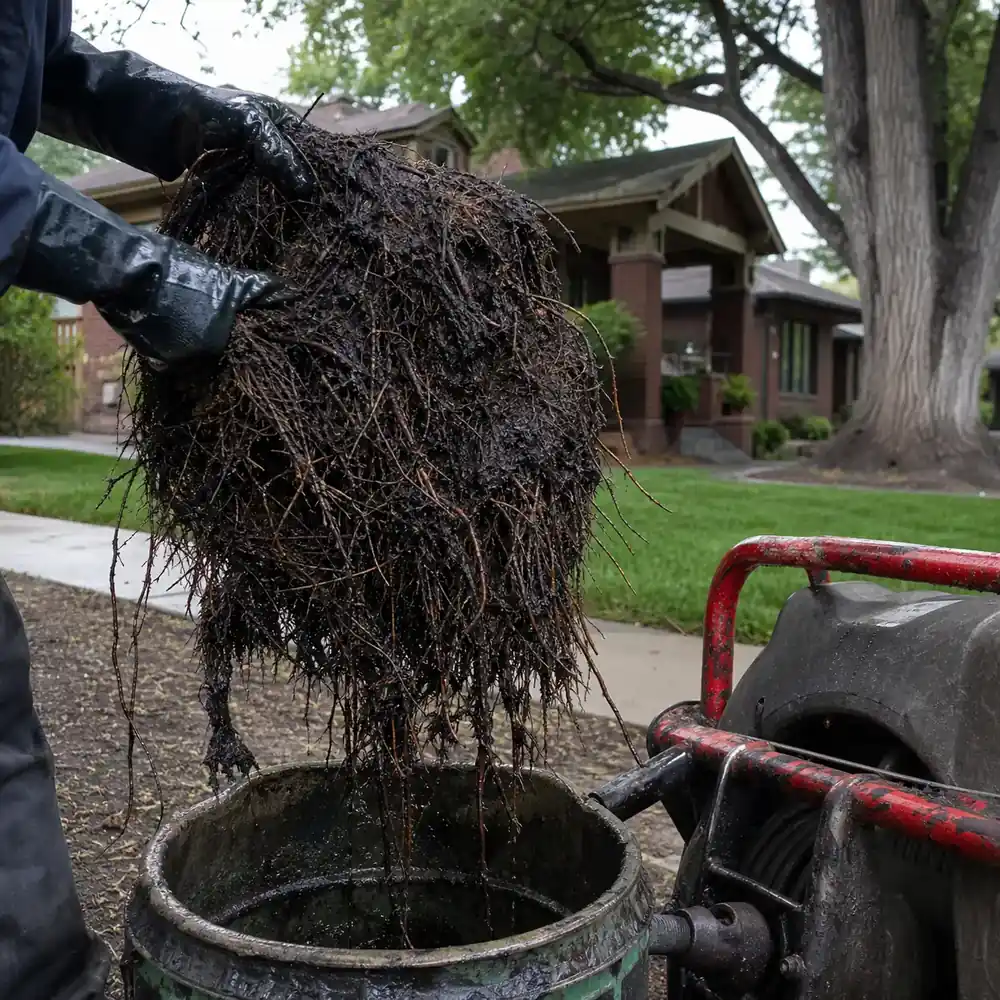
Rooter service
When the camera finds roots, this is what clears them, with the cutting head sized to the pipe.
See rooter service →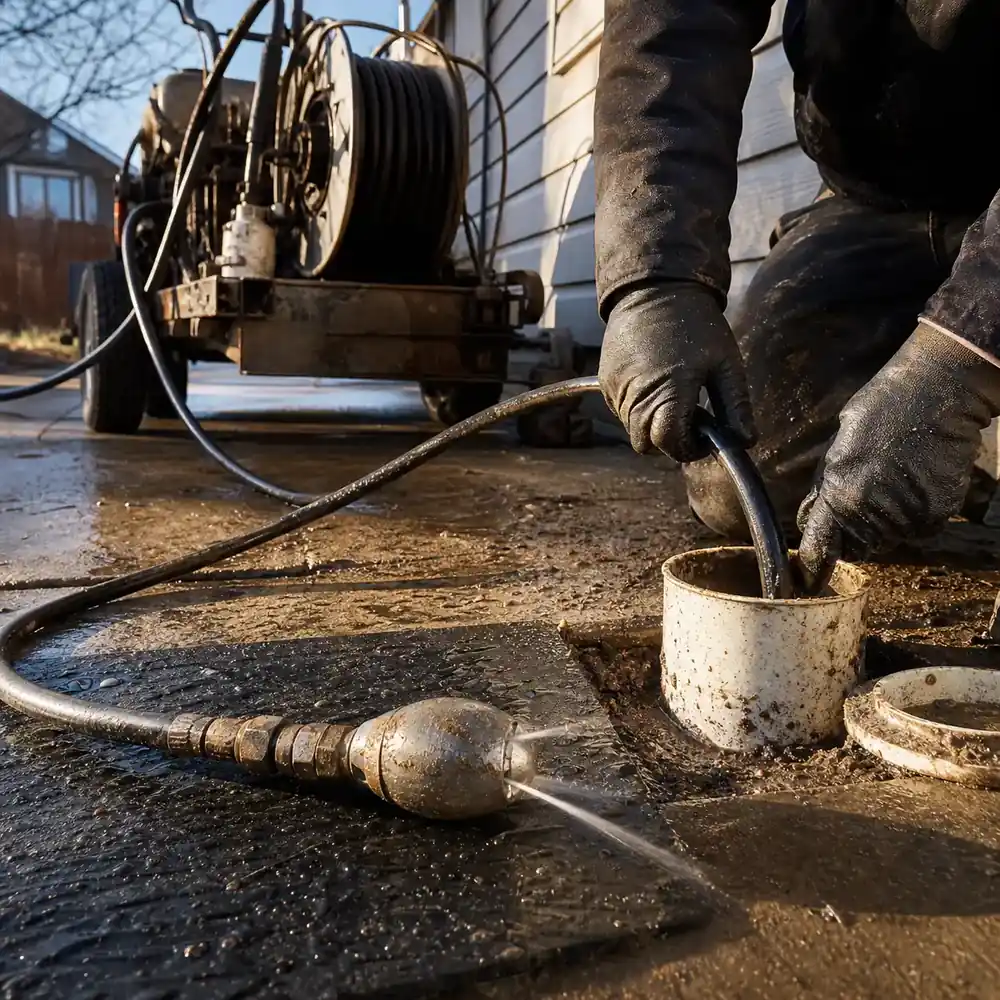
Hydro jetting
When the camera finds a coated pipe that is structurally sound enough to take the pressure.
See hydro jetting →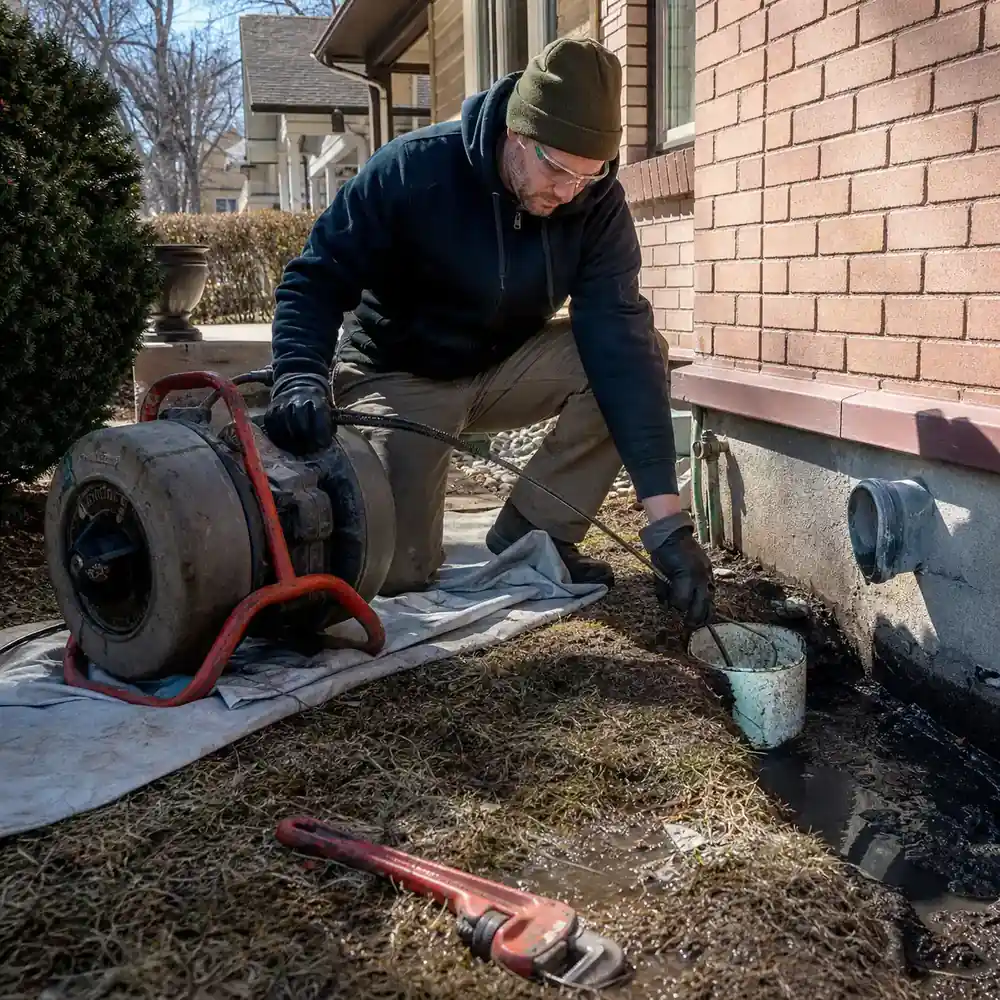
Drain cleaning
The core service, with camera verification after clearing to confirm the line is actually clear.
See drain cleaning →Sewer camera inspection across the Denver metro
We run camera inspections and pre-purchase sewer scopes in these areas. If yours is not listed, call and ask.
Ask about a camera inspection
Call and describe what's been happening: how often it blocks, what's been done, and roughly when the house was built. That usually tells us whether a camera run is the sensible next step.
Call (720) 794-0974