
Why the difference matters
A fixture clog sits in the trap or the first few feet of the branch line serving one sink, tub or toilet. It is a small job, often a DIY one, and it affects nothing else in the house.
A main sewer line problem sits in the single pipe carrying waste from the entire house to the municipal sewer. It affects everything, it needs a much larger machine, and if it fails completely the wastewater has to surface somewhere inside your home.
Same symptom at the fixture. Completely different situation underneath.
The five-minute test
Do this before calling anyone. It will make the call far more useful.
Isolate the fixture
Make sure nothing else in the house is running. No washing machine, no dishwasher, no taps, nobody in the shower. Now run the fixture that is giving you trouble. Drains normally with everything else off? That is a strong sign the fixture itself is fine and something upstream in the shared system is the issue. Still drains slowly with everything else off? The restriction is likely in that fixture's own branch line. Probably a local clog.
The cross-talk check
Run a different fixture and watch the one you are worried about. Flush the toilet and watch the tub. Run the kitchen sink and watch the basement floor drain. Anything gurgle, rise or back up? Those two fixtures share a line and it cannot take the flow. That is a shared branch or the main sewer line. Nothing reacts? Local clog.
The lowest fixture rule
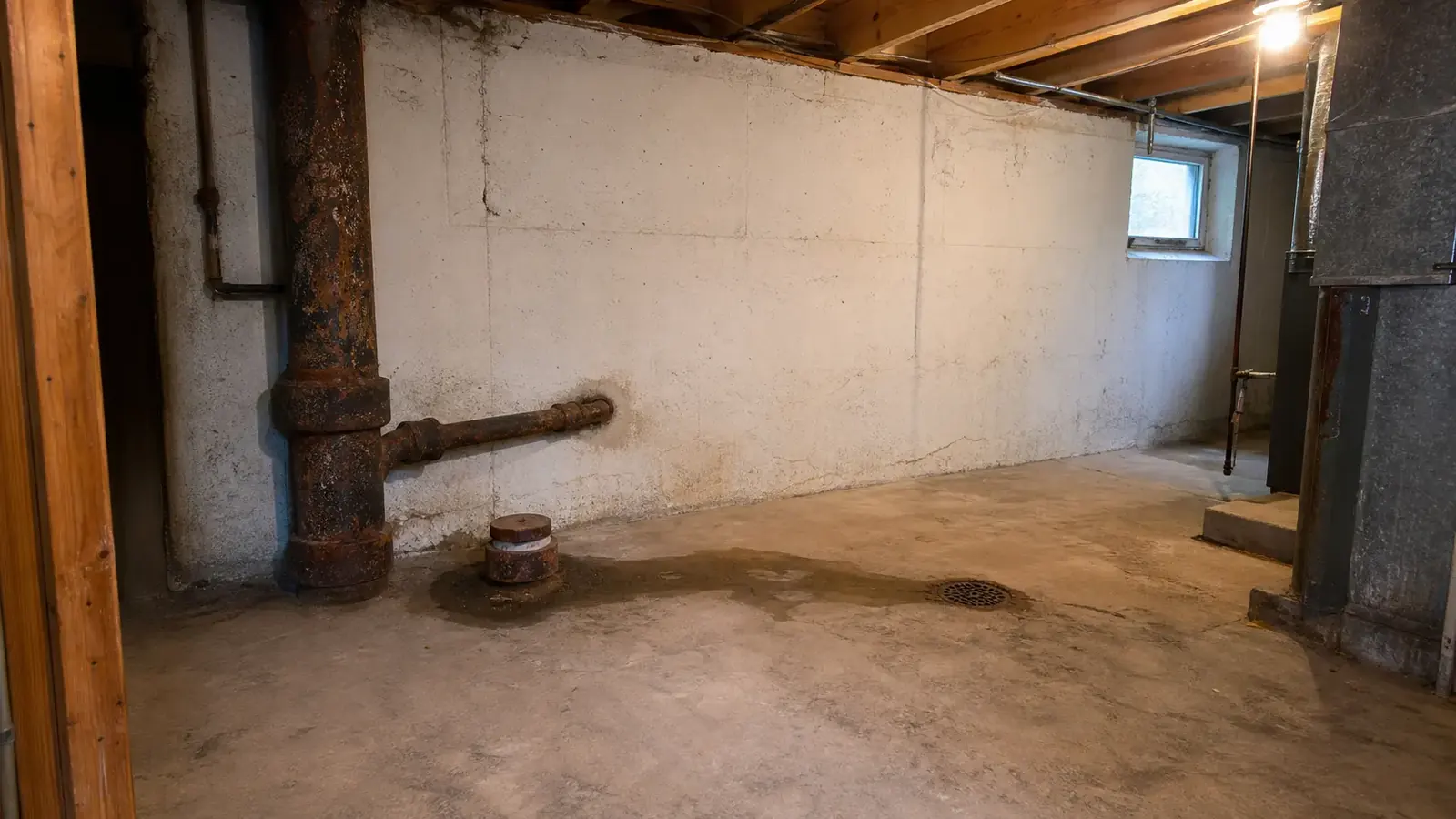
Water finds the lowest point. When a main line restricts, the lowest opening in the system is where it surfaces first. Go and look at the lowest drain in the house, usually the basement floor drain. Anything there wet, smelly, or holding water it should not be? That is main line territory, even if the fixture you originally noticed is upstairs.
Count the fixtures
One: local clog, almost certainly. Two or more on the same floor: shared branch line. Two or more on different floors, or anything involving a toilet plus a lower fixture: main sewer line.
Check the pattern over time
First time this has happened? Could be either, but a one-off is more often a local clog. Returns on a schedule? Usually the main line, because something is regrowing or reaccumulating. A spring-timed pattern in an older Denver home points strongly at roots.
Ran the test and more than one fixture reacted? That is a main-line answer. Call (720) 794-0974 and describe what happened.
What each one usually turns out to be
Local fixture clogs
Kitchen sink: grease, food debris, ground material from a disposal, setting in the horizontal run.
Bathroom sink: hair bound with soap and toothpaste, usually within two feet, often in the trap or on the pop-up stopper rod.
Tub or shower: hair and soap, made worse in Denver by hard water scale on the pipe wall giving it something to grip.
Toilet: almost always an object. Wipes, cotton products, something a child posted.
Main sewer line problems
Tree roots. The most common cause in Denver's pre-1960 housing. Vitrified clay laterals have a joint every few feet, and mature elms, cottonwoods and maples root into them. The mass then catches everything that passes.
Accumulated grease. In newer housing with fused PVC, roots have no way in, so a main line restriction is usually years of kitchen grease coating the pipe.
Wipes. Extremely common in newer housing. They pass the toilet intact and catch where the flow slows or the line turns.
Scale. Older cast iron narrowing inward over decades until it catches things.
Structural problems. A separated joint, a belly holding standing water, or a collapsed section, including Orangeburg pipe in Denver homes built roughly 1945 to 1972.
What you can safely try yourself
For a local clog: a plunger, and if that fails, a hand auger. Both are cheap, both work on the majority of single-fixture clogs, and there is no reason to pay someone for a bathroom sink you can clear in ten minutes.
For a suspected main line problem: stop. There is genuinely nothing useful a homeowner can do here, and several things that make it worse.
Do not keep flushing to see if it has cleared. Do not run the washing machine to test it. And do not pour chemical drain cleaner into it, because it will not move a main line blockage and it does not drain away. It sits in the pipe, and whoever opens that line next is opening one full of caustic liquid.
Not sure how to read the result? Talk it through by phone before you book anyone, on (720) 794-0974.
Is it my line or the City's?
Generally the property owner is responsible for the sewer lateral, the pipe from the building to the connection at the public main, and the utility for the main itself. The exact boundary varies by jurisdiction, so check with Denver's wastewater utility for your address rather than assuming.
A useful early signal: if only your property is affected, it is most likely your lateral. If neighbours on the same block have the same trouble at the same time, that points downstream and is worth reporting to the utility.
If the test points at the main line, start with rooter service, or emergency drain service if it is actively backing up.